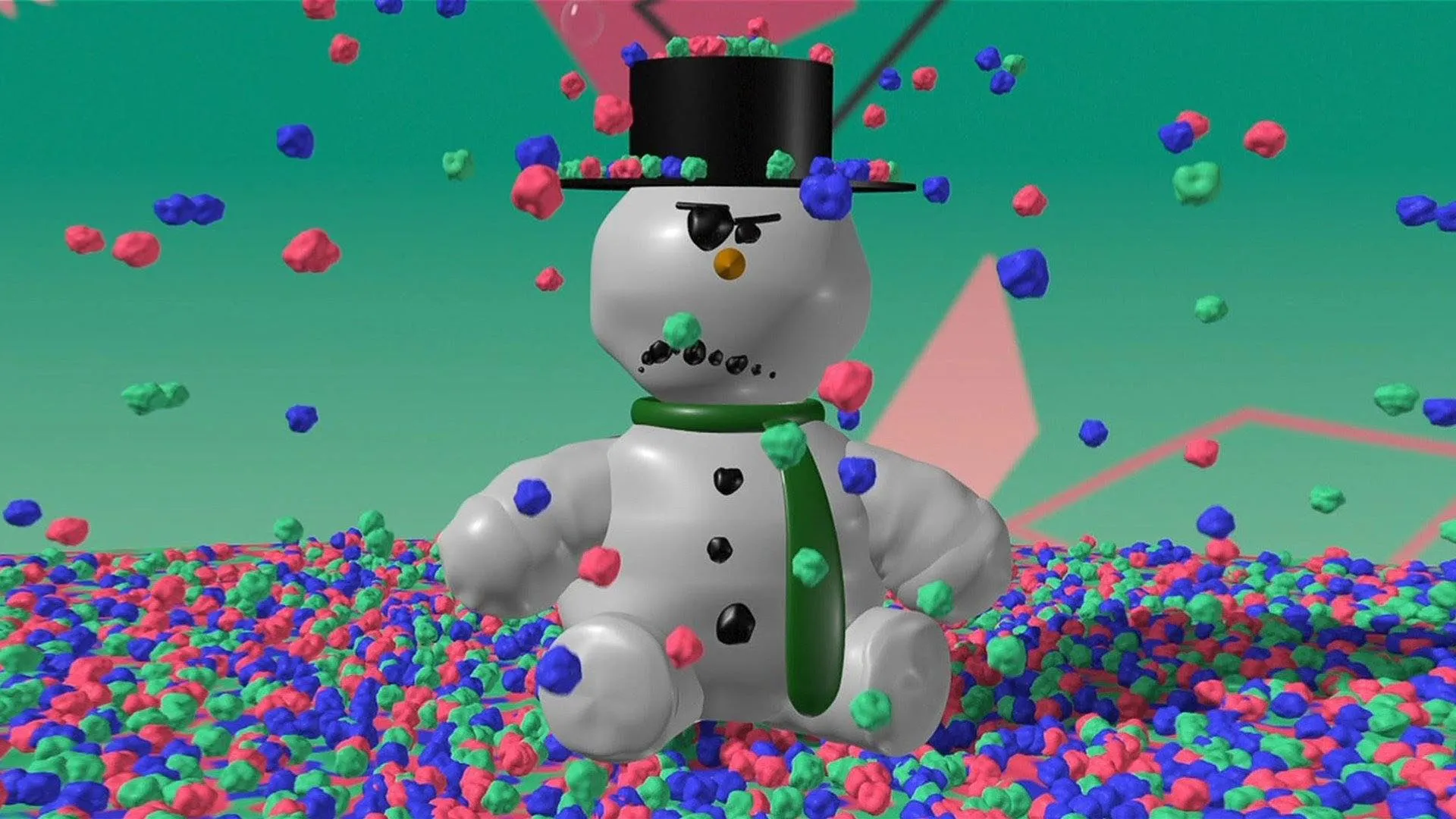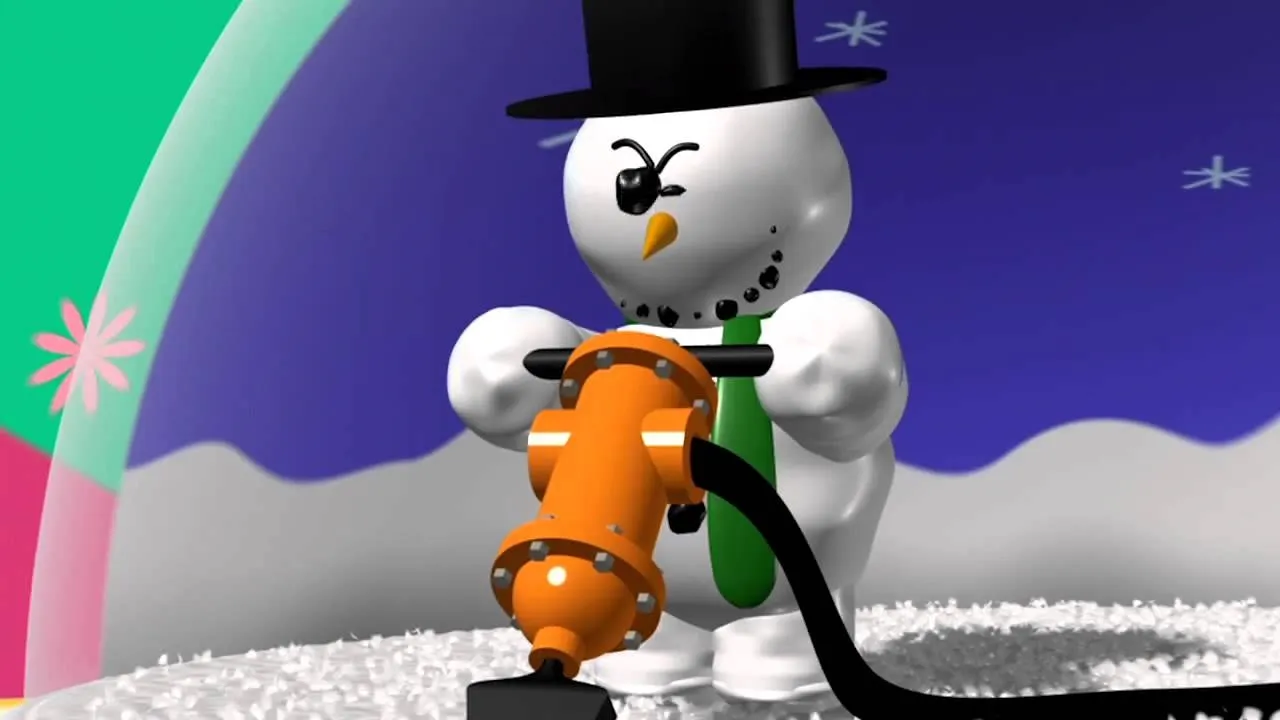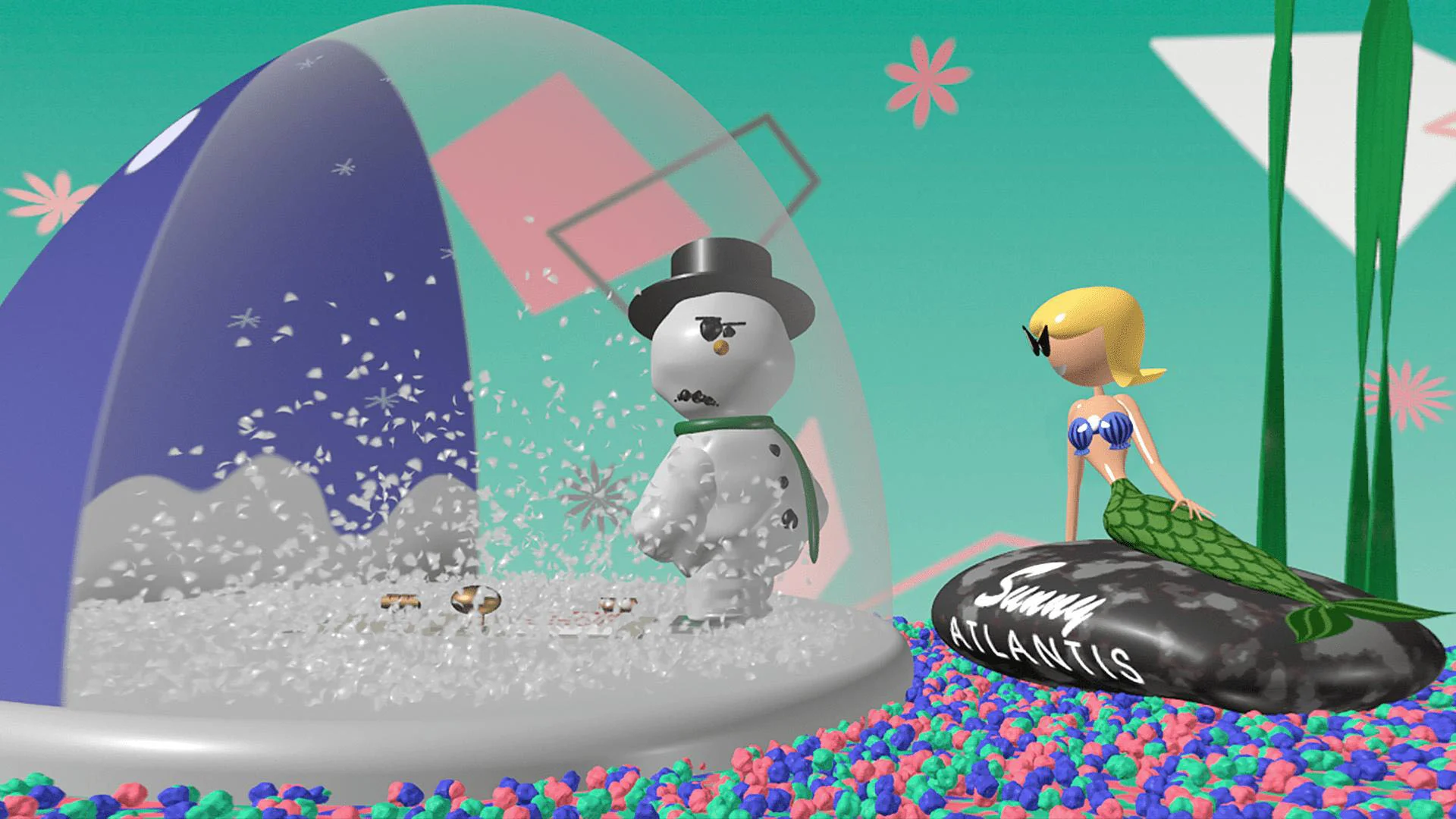
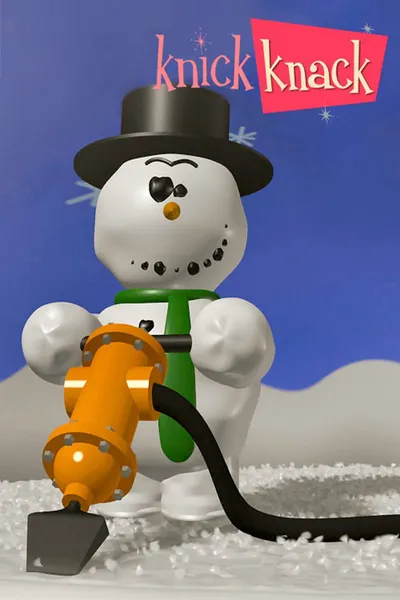
The short film stars Knick, a small and lively snowman, trapped in his glass sphere engraved with the label “North Pole”. The sphere sits on a shelf crowded with exotic souvenirs, including a series of figurines from warm, sunny places. Among them, a charming figurine depicting a woman in a bikini, labelled ‘Sunny Miami’, particularly catches Knick's eye. Eager for company and desperate to escape his icy prison, Knick embarks on a series of hilarious and violent escape attempts. Using every means at his disposal, Knick lunges, pounds and bangs against the sphere, trying to break it, crack it or smash it, but the glass proves invulnerable. Finally, he finds a clever solution: Knick notices that the snow inside the globe, shaken, begins to melt. Using the accumulated water, the snowman manages to unbalance the sphere, causing it to fall disastrously from the shelf. Finally free from his confinement, Knick lands in a water-filled aquarium located directly below. Filled with joy at his newfound freedom, Knick swims eagerly towards an alluring mermaid figurine in the aquarium. However, fate conspires against him: just as he is about to reach the mermaid, the glass dome of his old globe also falls from the shelf and lands, trapping him once again in another glass prison, just inches from his longed-for freedom.
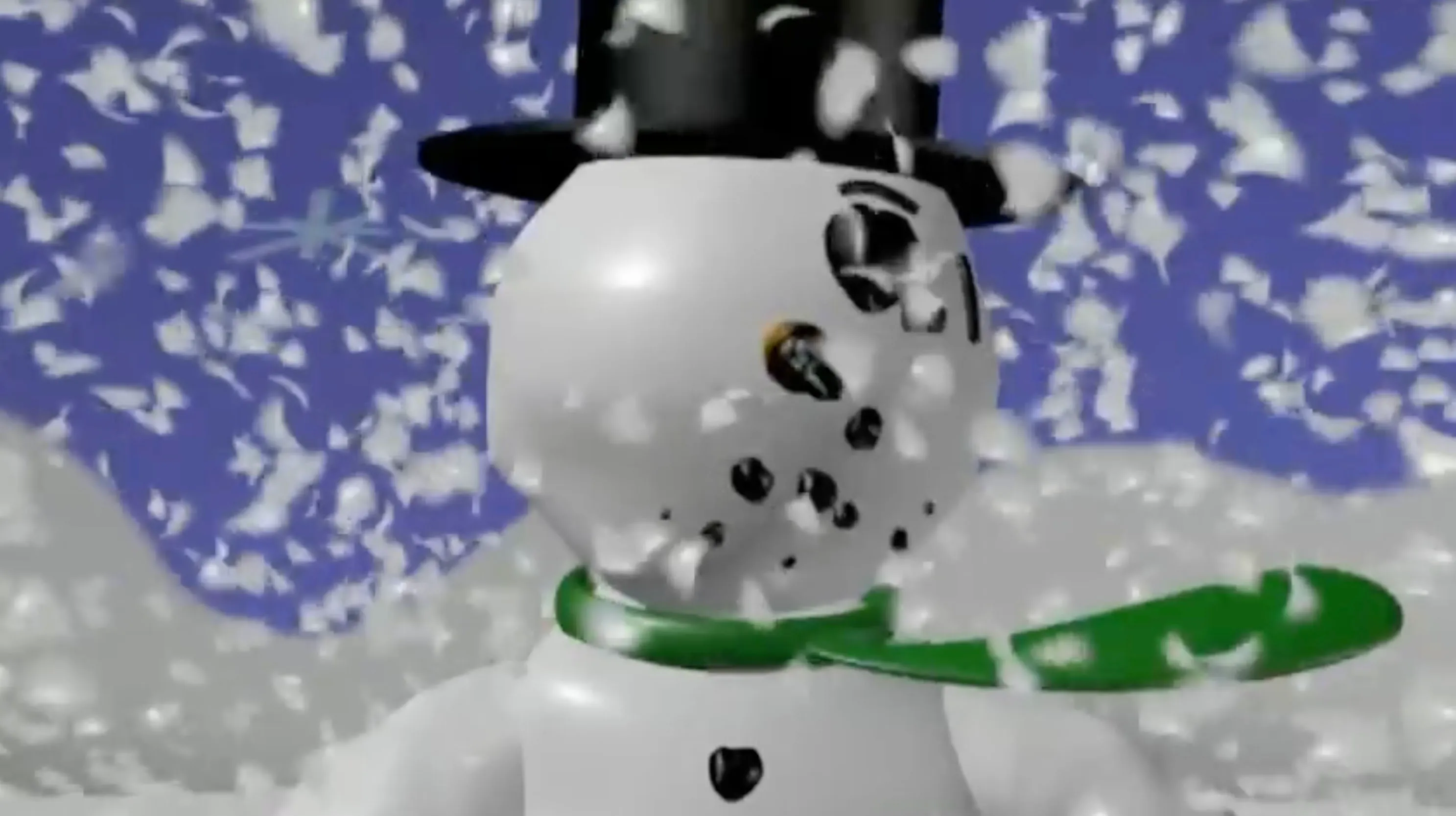
In Knick Knack, the technical challenge was to credibly simulate the effect of a dynamic snowstorm inside a glass sphere, an effect that required much more than simple pre-programmed movement. To achieve this, the Pixar team enhanced the particle system (previously developed by Bill Reeves for the leaves in André and Wally B.). The key innovation was the integration of a fluid (or force field) simulator within the particle system. Virtual elements called “blowers” or force fields were implemented. These not only moved the particles (the snowflakes), but pushed them and made them float organically. Instead of following simple trajectories, the snowflakes moved as if they were subject to turbulence and air currents within the sphere, creating the illusion of a real snowstorm. The animation process was essentially parametric, combining the automation of simulation with manual refinement to achieve the desired effect. Animators began by defining the key parameters of the system (e.g., simulated wind speed, snowflake density, direction and intensity of blowers). The system then automatically generated the snow simulation based on these inputs. This automatically generated result served as a baseline. However, the unpredictable nature of the simulation required an additional level of control. The process was then retouched shot-by-shot to ensure that the snowflakes did not interfere with Knick in undesirable ways and that the storm had the dramatic impact required by the narrative. This hybrid approach allowed Knick Knack to achieve a high level of visual complexity and physical realism in the simulation of atmospheric agents, which was fundamental to the setting of the short film.