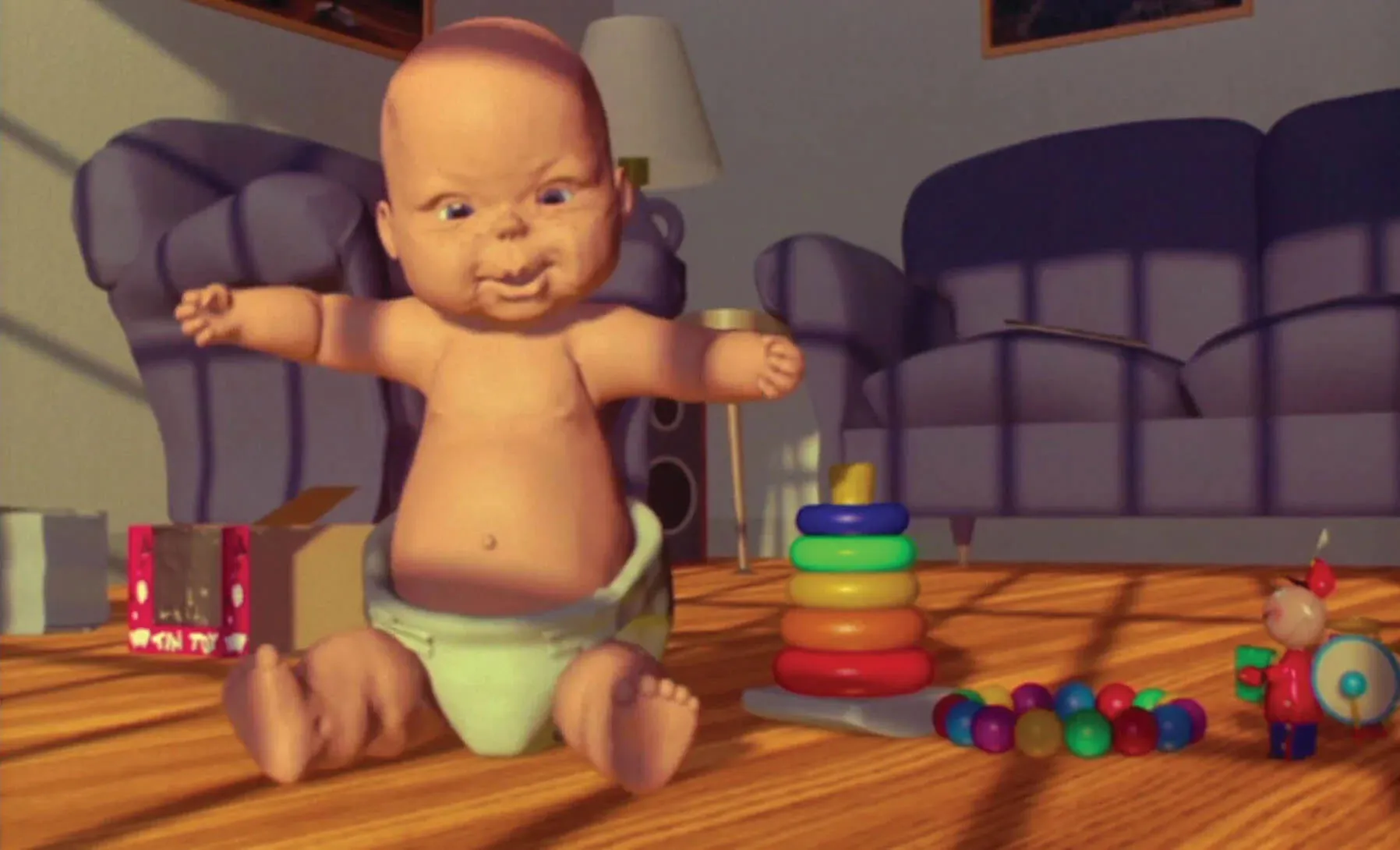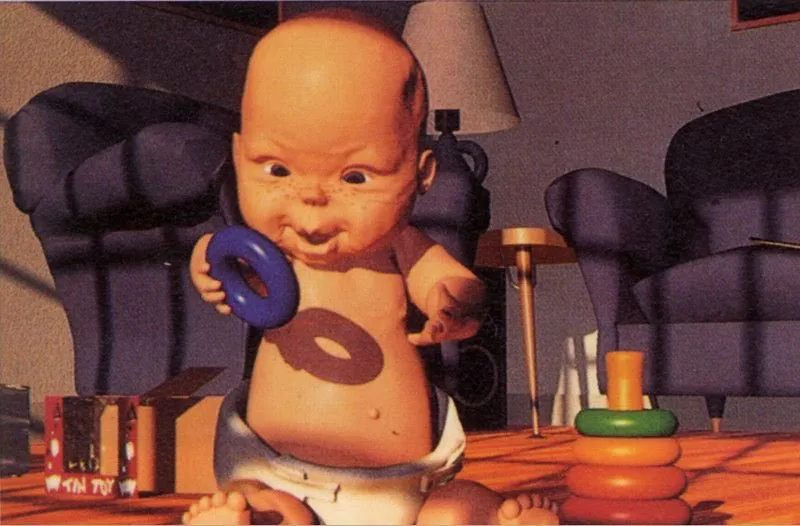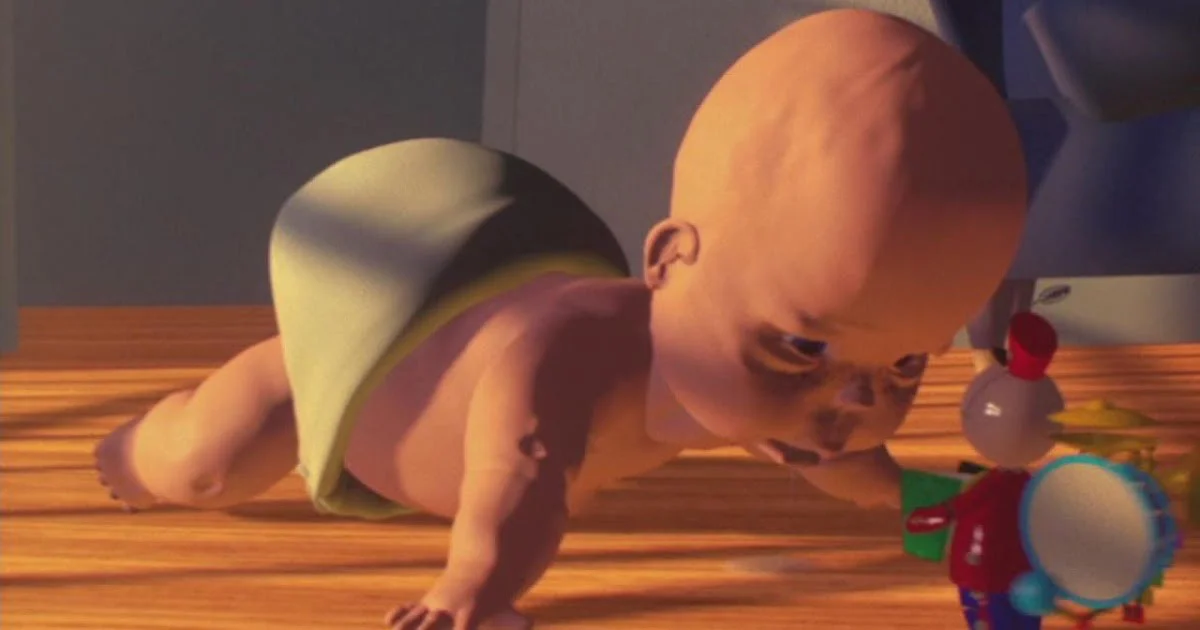
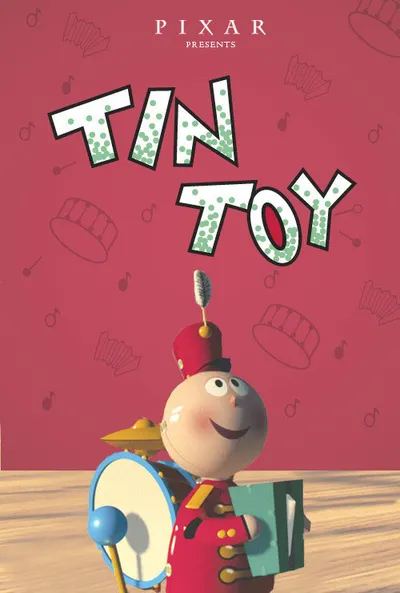
The short film introduces us to Tinny, a tiny tin soldier, brand new and full of joy and excitement at the idea of being the favourite toy of Billy, the child of the house. Initially, Tinny's anticipation is great, but it quickly turns to horror. Billy turns out to be an incredibly exuberant and destructive child who does not play with his toys but rather mistreats and destroys them: he throws them violently, bangs them and even tries to chew them with childish fury. Terrified by this unexpected violence, Tinny embarks on a desperate escape. She manages to hide in a safe, dusty place under the living room sofa. There she discovers she is not alone: she finds a group of frightened and damaged toys who share her fate and awe of the little human tyrant. The situation changes when the child, in the midst of one of his tantrums, falls to the floor and bursts into inconsolable tears. Hearing the crying, Tinny, in an act of unexpected courage and compassion, overcomes his terror. He decides to come out of hiding and return to the child with the intention of comforting and distracting him. However, his heroic effort is rewarded with bitter indifference. As soon as Tinny approaches, the child stops crying and ignores him completely, focusing his attention on a shiny music box he has found nearby. The tin soldier stands there, bewildered and forgotten, while Billy enjoys his new pastime, leaving Tinny to reflect on his fleeting role in the child's life.
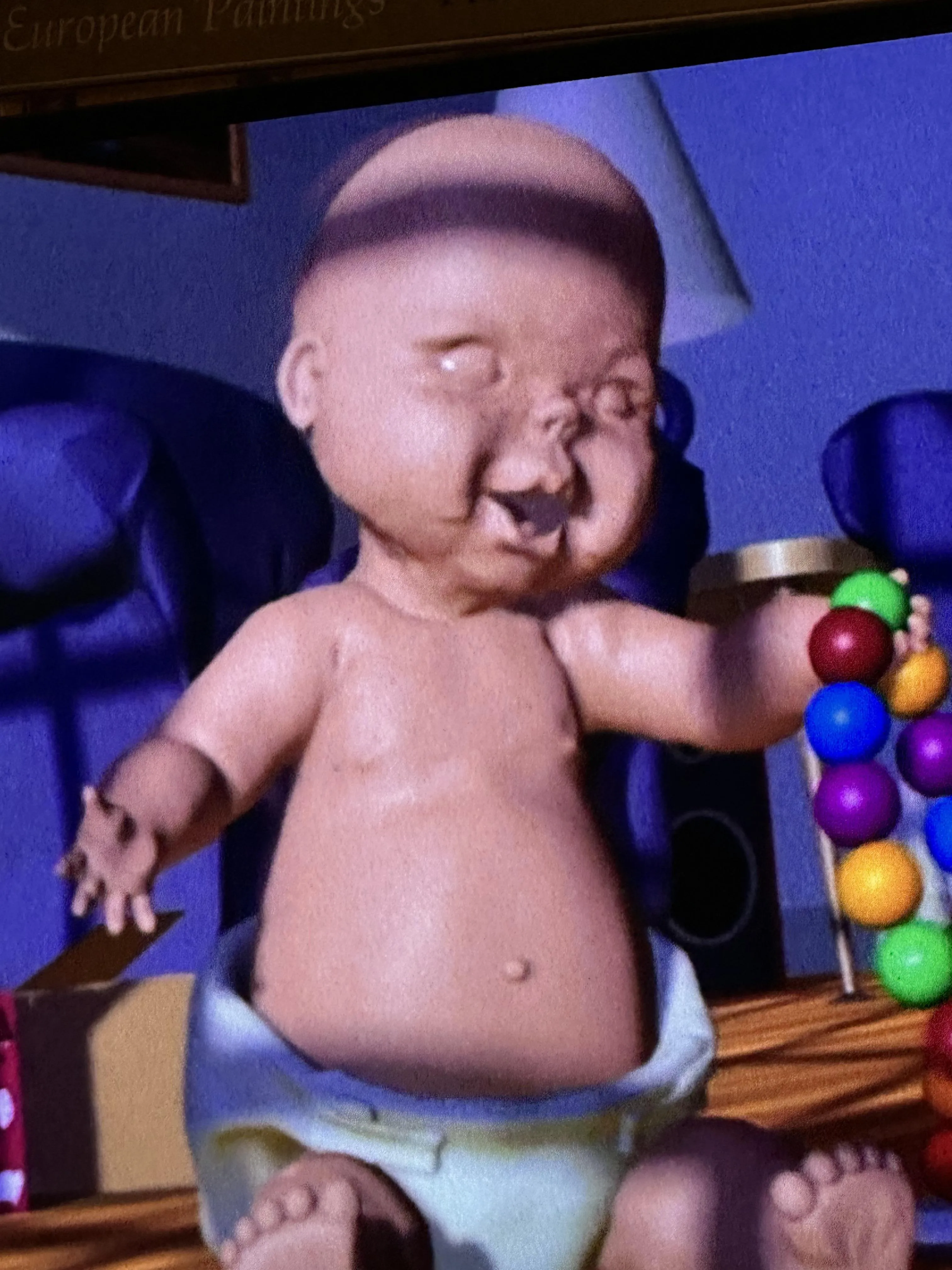
In Tin Toy, the realism of the characters, particularly that of the child Billy, and the complex environment (such as the cluttered living room) required the use of high-resolution textures and large amounts of data. The crucial innovation that made it possible to handle this amount of information was the TOD (Textures On Demand) system. At the time of production, computers had very limited RAM. Loading all the textures needed to render a single frame of a complex environment (such as Billy's face) into memory was impractical or impossible due to memory restrictions. Attempting to load all textures at once would slow down rendering to an unacceptable degree or cause system errors. The TOD system solved this problem elegantly: Tiling: textures were no longer stored as a single linear image. Instead, they were divided into small rectangular sections of fixed size, called tiles. Selective and on-demand loading: during the rendering process (which calculates how light rays hit surfaces): Only the tiles strictly necessary for the portion of the scene currently visible and rendered were read from the disk. These tiles were then loaded into memory (on demand), only when the renderer requested them. The TOD system enabled Tin Toy to use realistic, detailed textures without overloading the hardware, a crucial step in creating complex characters and environments in digital animation.
The efficiency of TOD has made it possible to implement two new techniques: Texture Mapping and Bump Mapping. The first is the technique of “mapping” a two-dimensional image (texture) onto a 3D surface, where each point on the 3D surface has a coordinate (u, v) that indicates where to take the colour from the 2D texture. The second is a technique for simulating “roughness” or protrusions on the surface of an object without increasing the number of polygons.