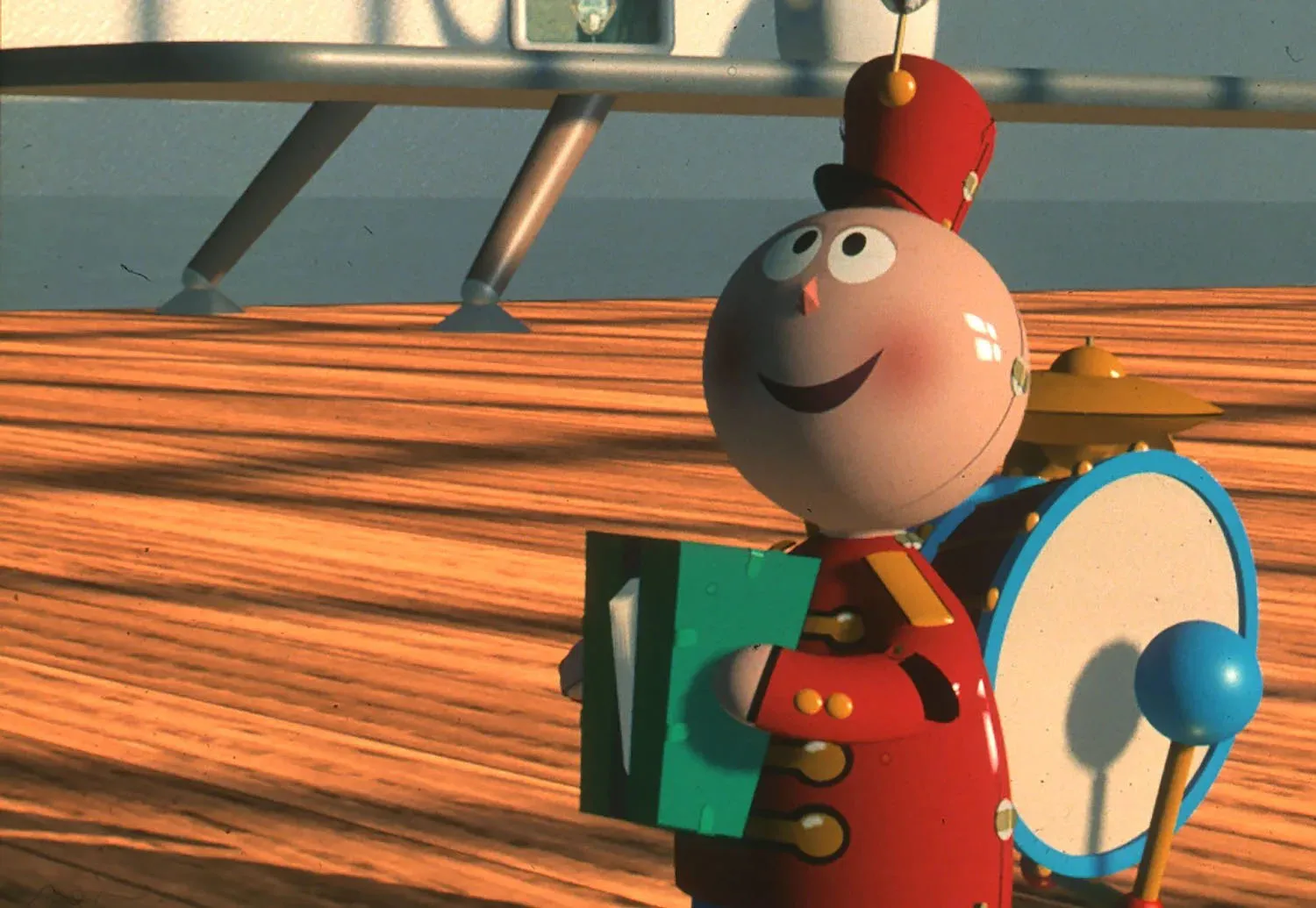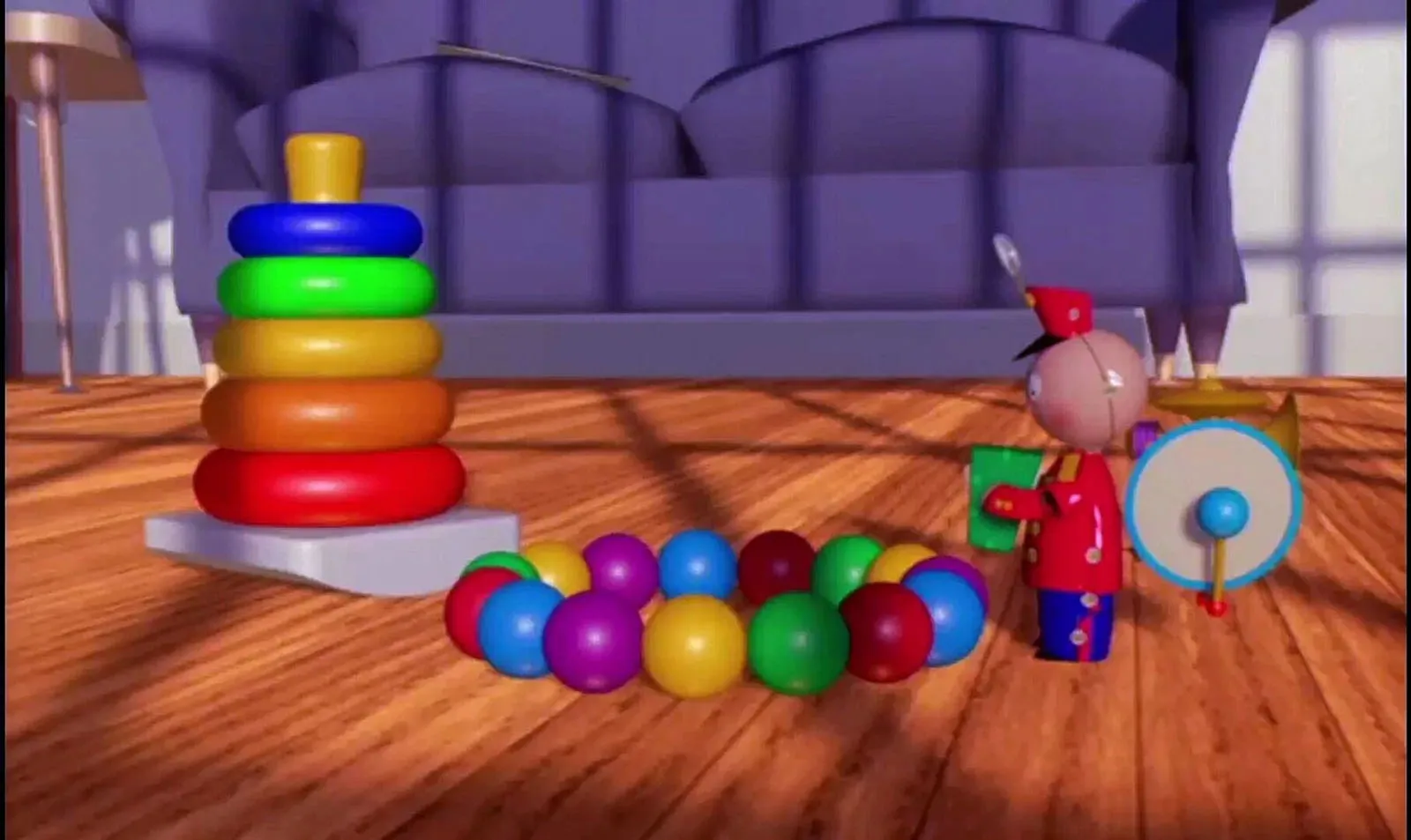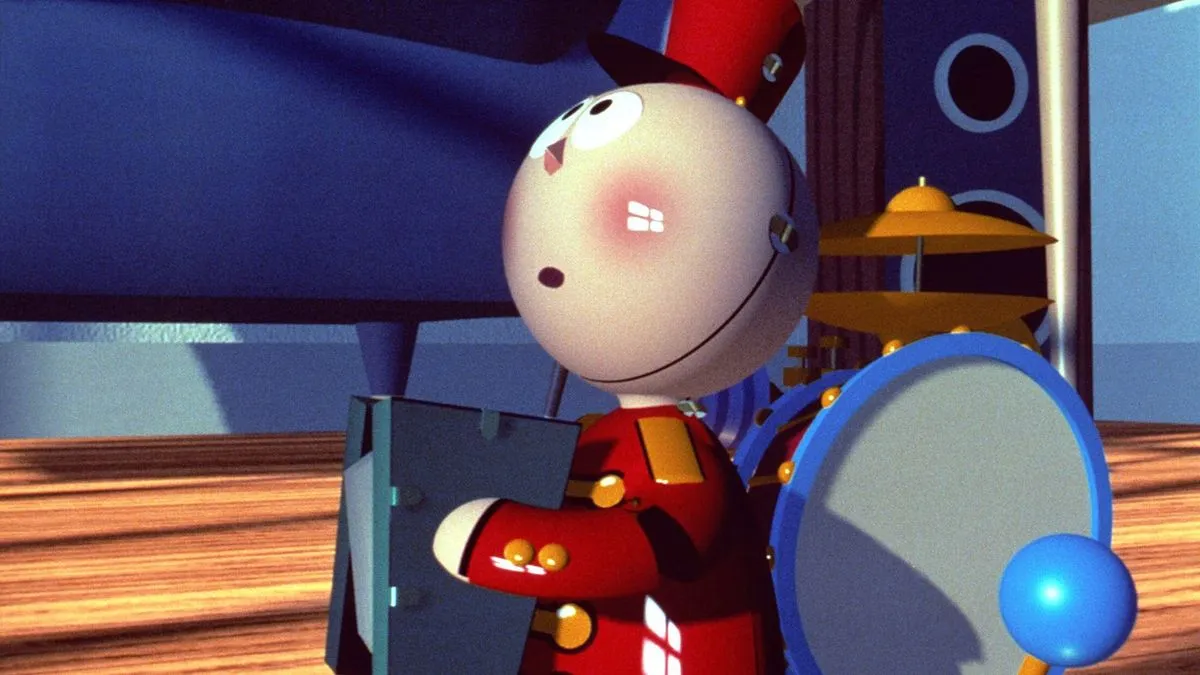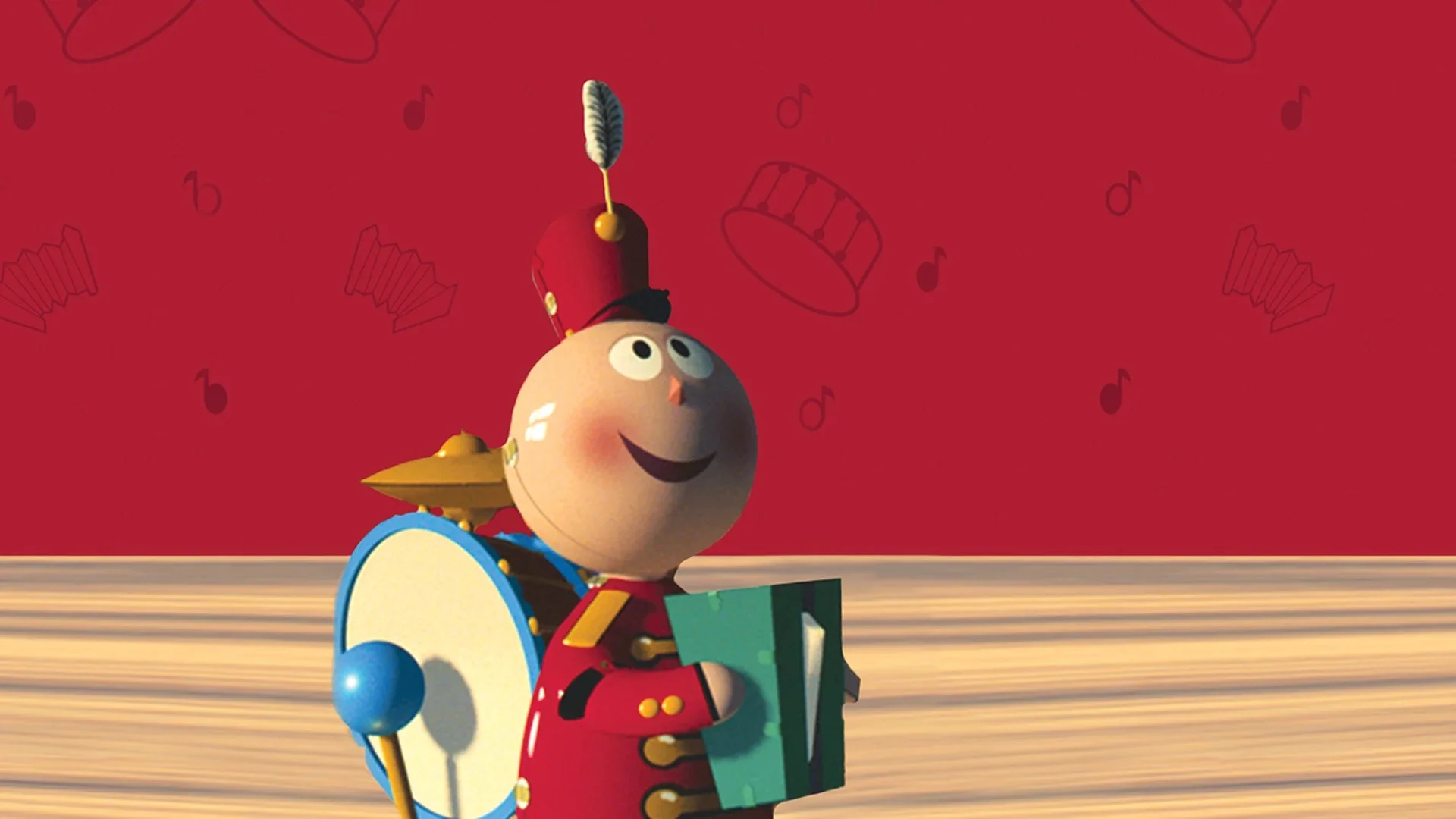
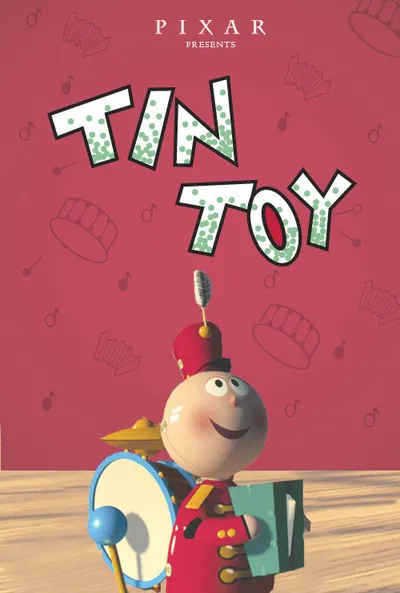
The short film introduces us to Tinny, a tiny tin soldier, brand new and full of joy and excitement at the idea of being the favourite toy of Billy, the child of the house. Initially, Tinny's anticipation is great, but it quickly turns to horror. Billy turns out to be an incredibly exuberant and destructive child who does not play with his toys but rather mistreats and destroys them: he throws them violently, bangs them and even tries to chew them with childish fury. Terrified by this unexpected violence, Tinny embarks on a desperate escape. She manages to hide in a safe, dusty place under the living room sofa. There she discovers she is not alone: she finds a group of frightened and damaged toys who share her fate and awe of the little human tyrant. The situation changes when the child, in the midst of one of his tantrums, falls to the floor and bursts into inconsolable tears. Hearing the crying, Tinny, in an act of unexpected courage and compassion, overcomes his terror. He decides to come out of hiding and return to the child with the intention of comforting and distracting him. However, his heroic effort is rewarded with bitter indifference. As soon as Tinny approaches, the child stops crying and ignores him completely, focusing his attention on a shiny music box he has found nearby. The tin soldier stands there, bewildered and forgotten, while Billy enjoys his new pastime, leaving Tinny to reflect on his fleeting role in the child's life.
In Tin Toy, the Pixar team significantly refined their object and character management systems in preparation for larger projects. In previous short films, the animation, while advanced, often treated characters (such as André or Luxo) in isolation. For Tin Toy, the challenge was to create an entire group of secondary toys (the frightened toys under the sofa) that could react consistently and realistically to the presence of the child Billy and interact with the toy soldier Tinny. The team developed a more advanced rigging (digital skeleton) and object control system that went beyond simple modelling. For the first time, there was a clearer and more complex distinction between objects that needed to be fully animatable (Actors, such as Tinny and Billy) and objects that only needed a static pose or passive reaction (Props, such as some of the other toys). More complex object hierarchies were created for the toys. For example, for Tinny's head and limbs, the movements of a spring and the typical limitations of a tin toy had to be simulated. This made the toys' movements closer to those of a mechanical object and less like those of a living being.This management system made it possible to position the toys more realistically under the sofa (in contrast to the flat, empty surface of previous shorts), allowing their model to interact with the dust and texture of the fabric, improving the sense of weight and physical presence even for the smallest objects. Although TOD managed the visual aspect (texture), this actor management system managed the animation and physical interaction of the toys, which was crucial for the narrative of a short film in which inanimate objects come to life.