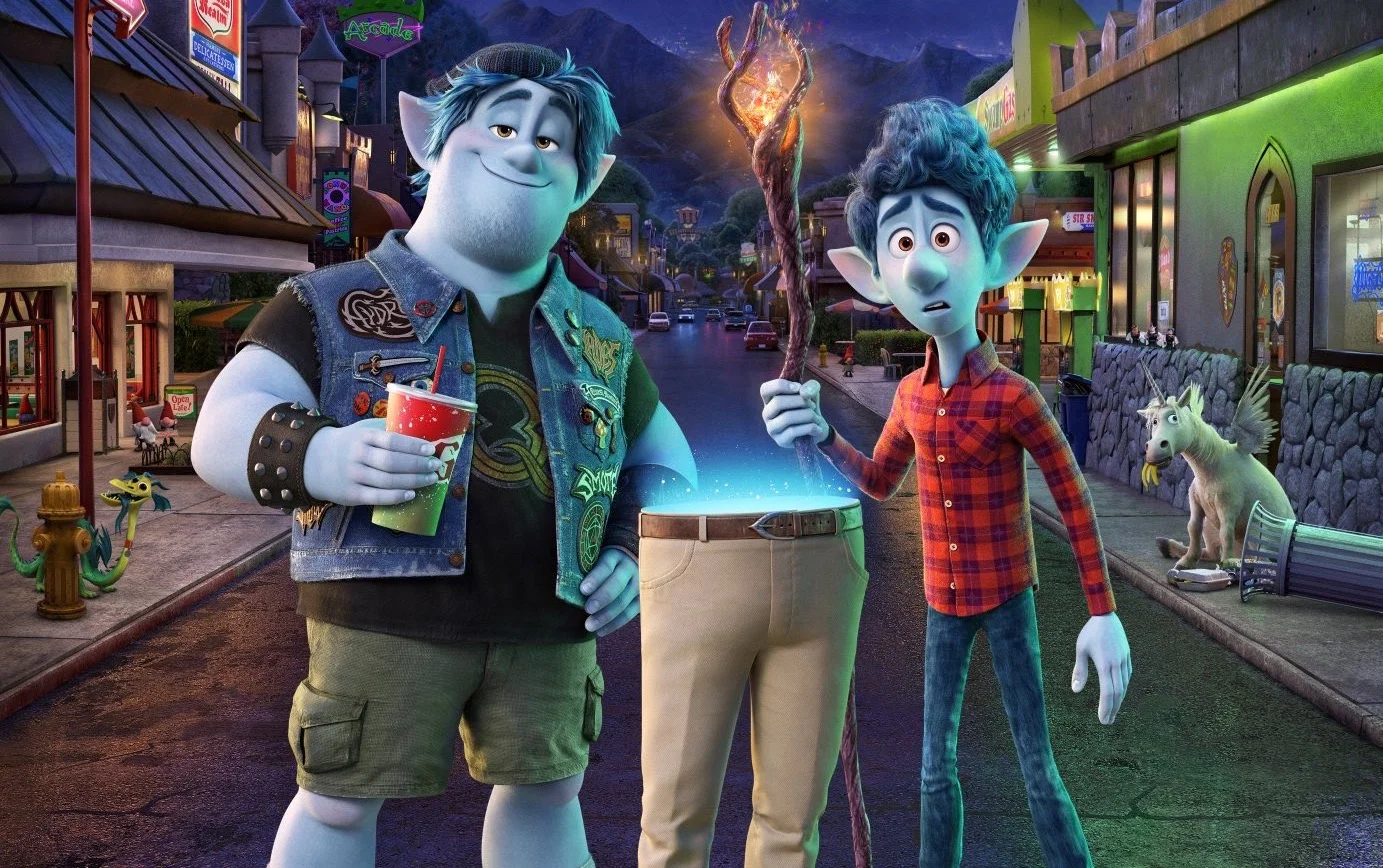
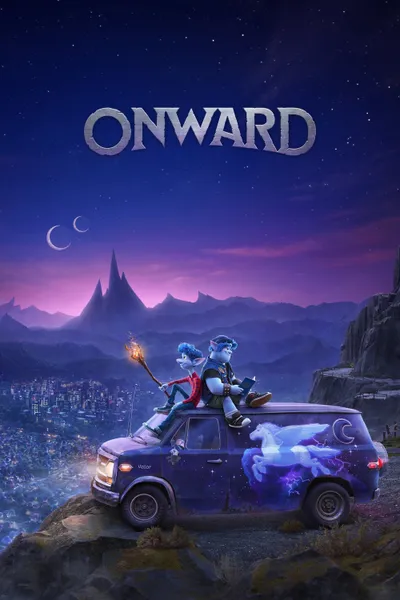
Set in a suburban fantasy world, Disney and Pixar’s “Onward” introduces two teenage elf brothers who embark on an extraordinary quest to discover if there is still a little magic left out there. “The story is inspired by my own relationship with my brother and our connection with our dad who passed away when I was about a year old,” says director Dan Scanlon. “He’s always been a mystery to us. A family member sent us a tape recording of him saying just two words: ‘hello’ and ‘goodbye.’ Two words. But to my brother and me—it was magic. “That was the jumping-off point,” continues Scanlon. “We’ve all lost someone, and if we could spend one more day with them—what an exciting opportunity that would be. We knew that if we wanted to tell that story that we’d have to set the movie in a world where you could have that incredible opportunity.”
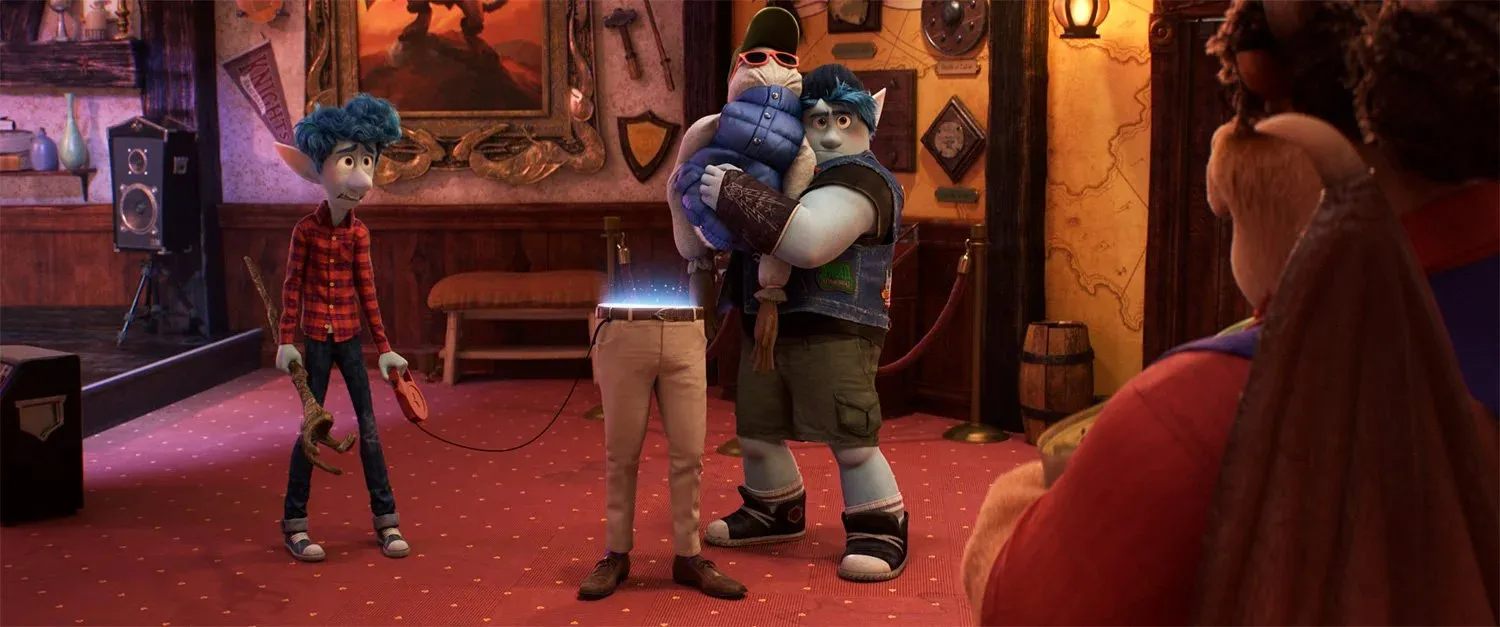
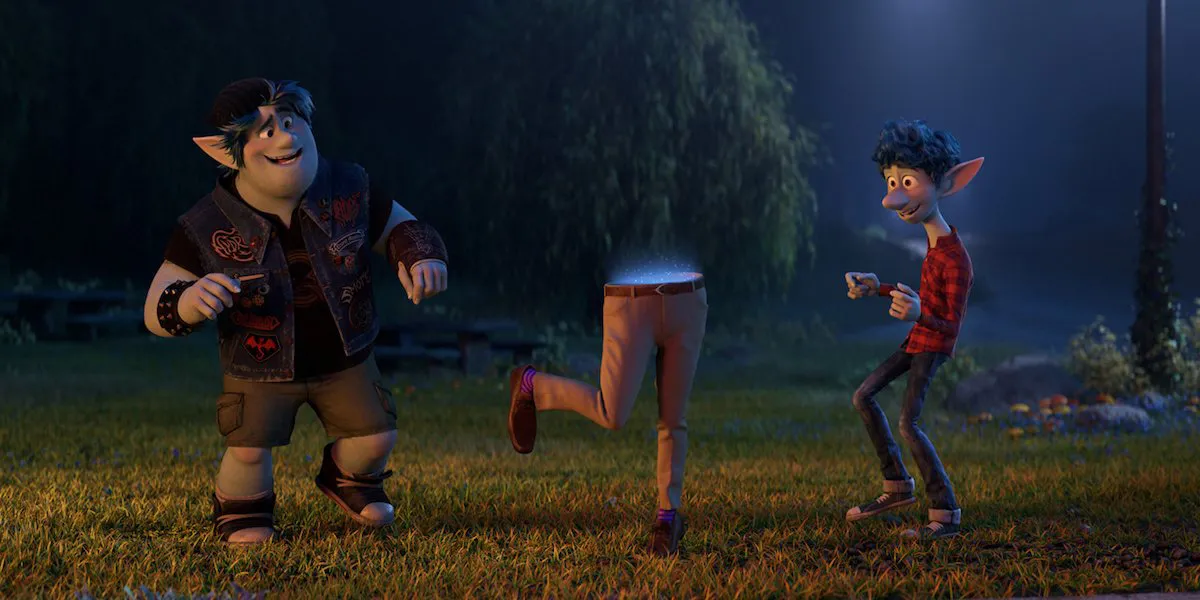
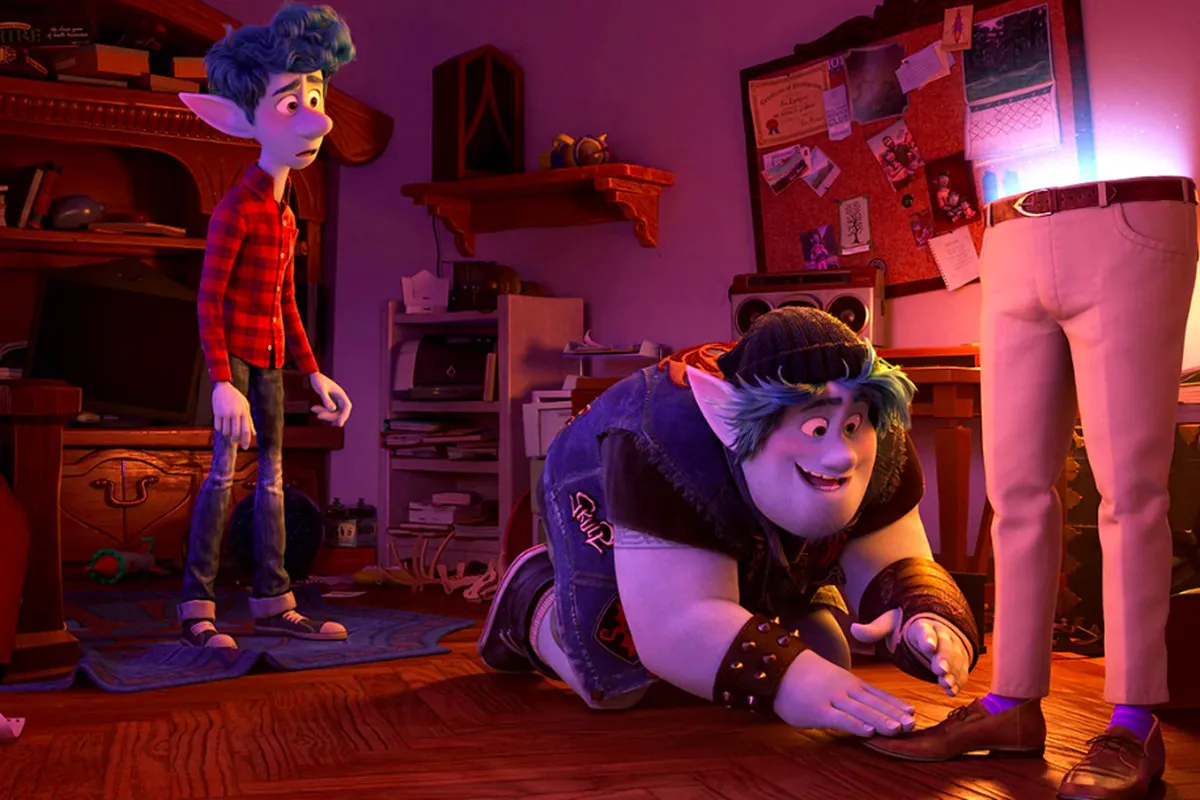
In Onward, Wilden Lightfoot is a character composed solely of a pair of legs, presenting unique animation challenges. Pixar developed a Hybrid Simulation-Animation Rig to handle this unconventional design, combining procedural simulation with traditional animation controls. This allowed animators to create lifelike, expressive movements while maintaining stability and consistency, giving personality and character to a figure defined entirely by its legs.
With this rig, animators could manipulate Dad's lower half like they usually would, but the simulation team controlled everything above the belt when needed. The movement of Dad's stuffing was based on a volumetric sim, a simulation for something with volume, while the clothes on top of the stuffing were largely controlled with standard cloth simulation. Pixar also improved the interaction between volumetric sims and cloth sims so that if you pushed on Dad's clothing, the stuffing would get squished believably, and vice versa, if you pushed on the stuffing, the clothing would move out of the way. The hybrid rig improved the relationship between separate simulations, and ultimately, it showed how simulation and animation could join forces to create realistic movement on an unrealistic character.