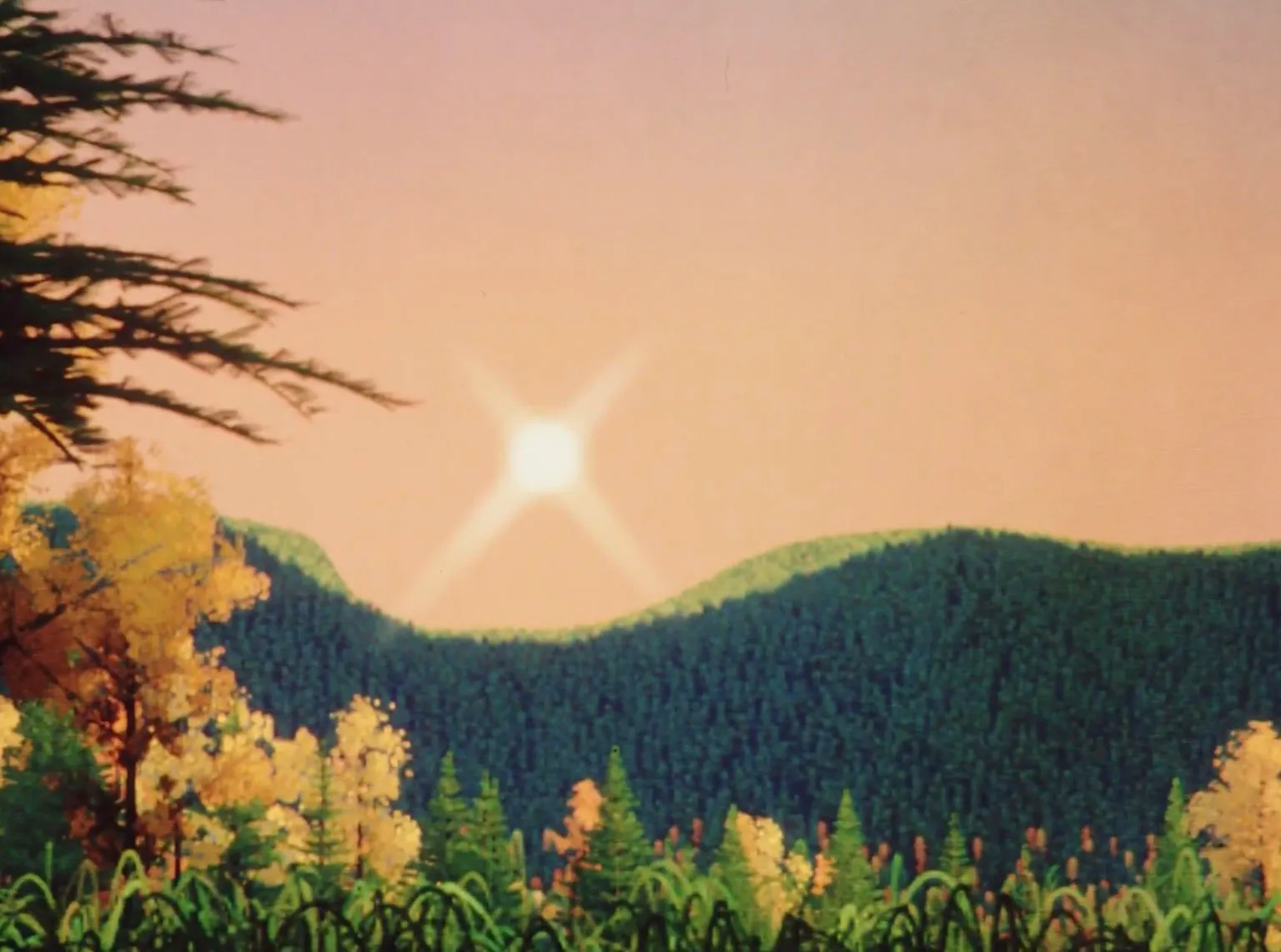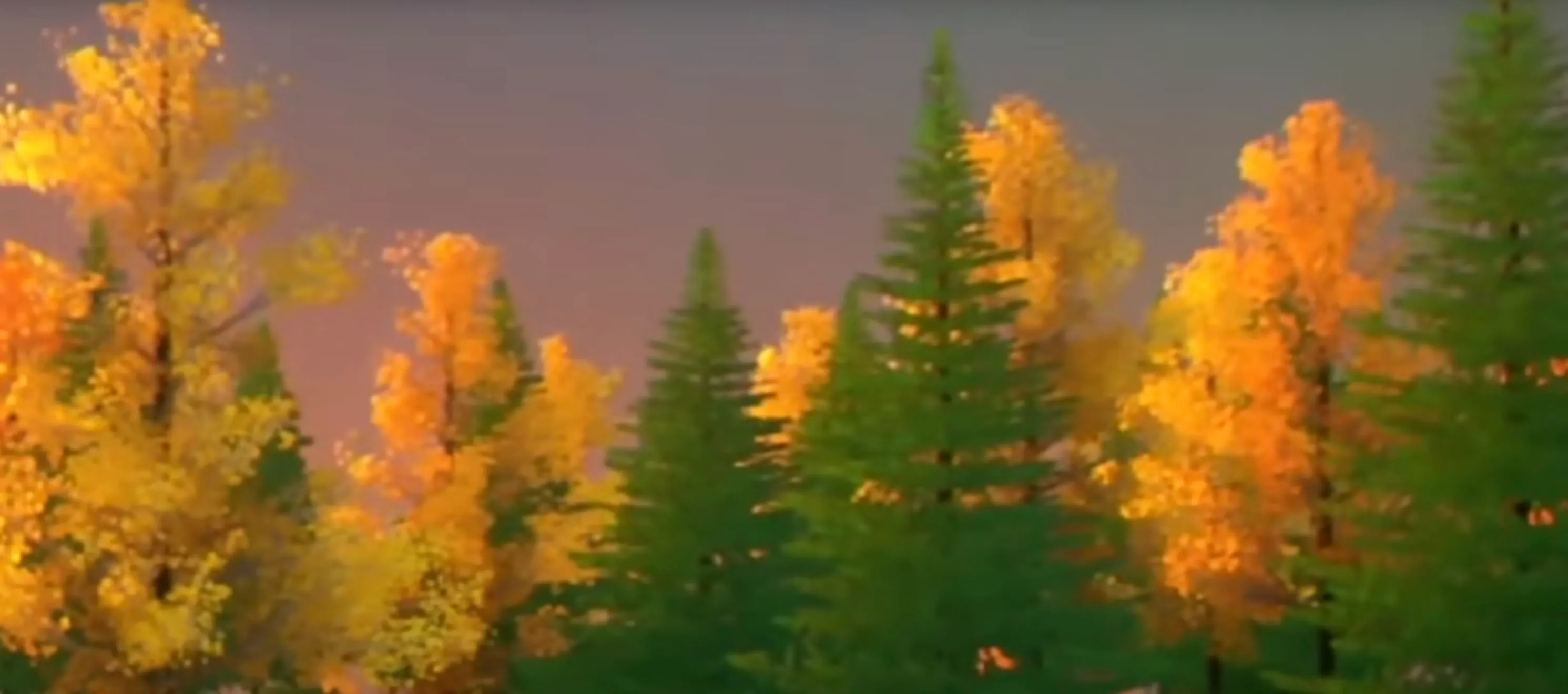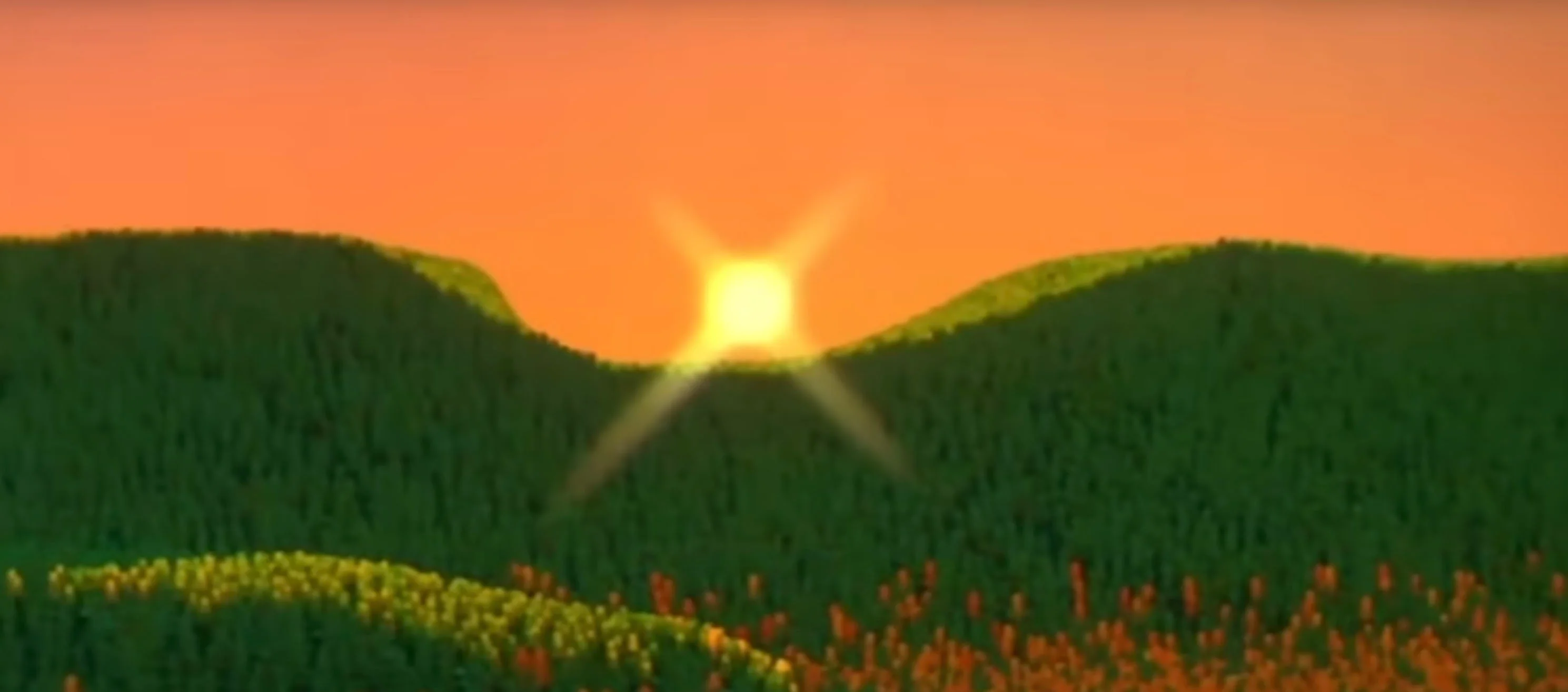
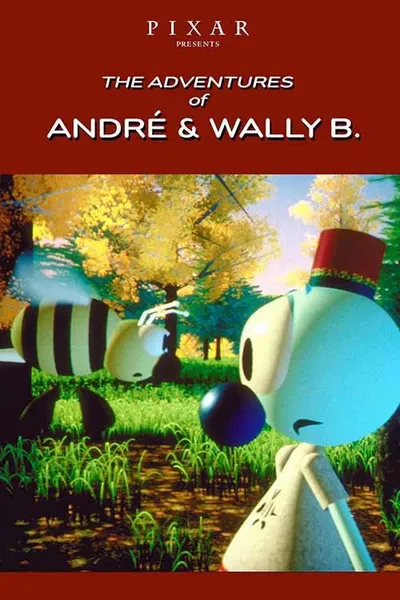
The short film opens with an image of peaceful serenity: the protagonist, André, is immersed in a deep and peaceful sleep in a bright and stylised clearing, under the warm sunlight. This bucolic tranquillity is suddenly interrupted by the arrival of Wally B., a buzzing and lively bee, whose insistent presence is clearly motivated by annoying intentions. Feeling threatened in his rest, André does not hesitate for a moment and desperately tries to escape the bee. This marks the beginning of a frantic and chaotic chase, where the two characters move at breakneck speed, darting relentlessly through the wooded landscape. At the height of the chase, Wally B. almost catches up with André, ready to launch his attack. However, the bee misses its target and crashes comically into the surface of a tree trunk. The impact is so violent that his stinger is visibly bent and twisted. Stunned and disoriented, the bee clumsily flies away. André, seizing the opportunity, decides to end the brief but intense confrontation with a mocking gesture: he takes off his cap and throws it with precision, hitting Wally B. in mid-flight. The bee falls to the ground, momentarily stunned by the double impact. But its spirit is not broken: a moment later, Wally B. gets up and quickly resumes flight. Despite its defeat, the bee flashes a cheeky, cunning smile, silently promising a possible rematch.
The setting in The Adventures of André and Wally B. conceals another fundamental technical innovation developed by Bill Reeves: the particle system. To make the hill setting believable, it was necessary to simulate the presence of a large number of tiny, individual elements, such as grass, bushes and, above all, the millions of individual leaves on the trees. Attempting to model and animate each individual leaf as a separate geometric object would have been computationally impossible for the technology of the time. Bill Reeves devised a system that circumvented this problem: - Collective creation and control: the system was designed to create and control millions of individual “particles” (which in this context acted as leaves, in others as smoke or fire). These particles were not treated as complex geometric objects, but as simple elements governed by collective rules. - Construction of larger objects: by controlling these millions of microscopic elements through a limited set of parameters (such as direction, speed, and particle “life”), larger objects with unprecedented visual complexity could be constructed. The final effect allowed the short film to present a dense, tree-covered hill with the perception of having millions of individual leaves. This gave depth and richness to the environment, overcoming the limitations of polygonal modelling, which at the time could only handle relatively simple shapes. This technique, the Particle System, became a standard and crucial tool for computer graphics, still used today to simulate complex natural phenomena, from smoke and water to vegetation.