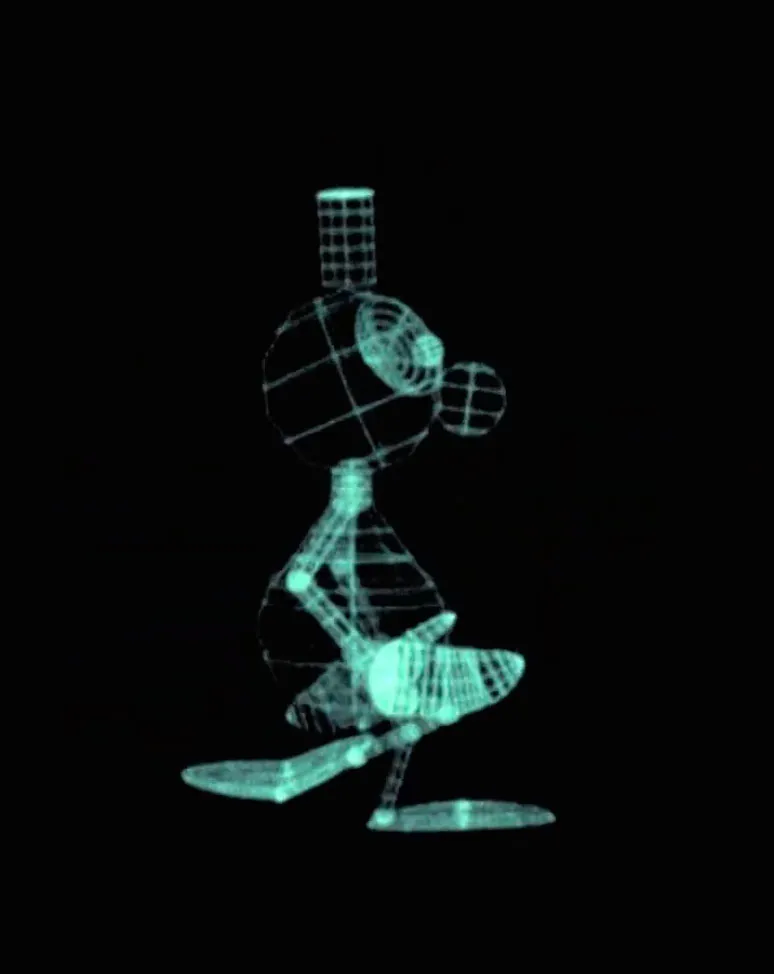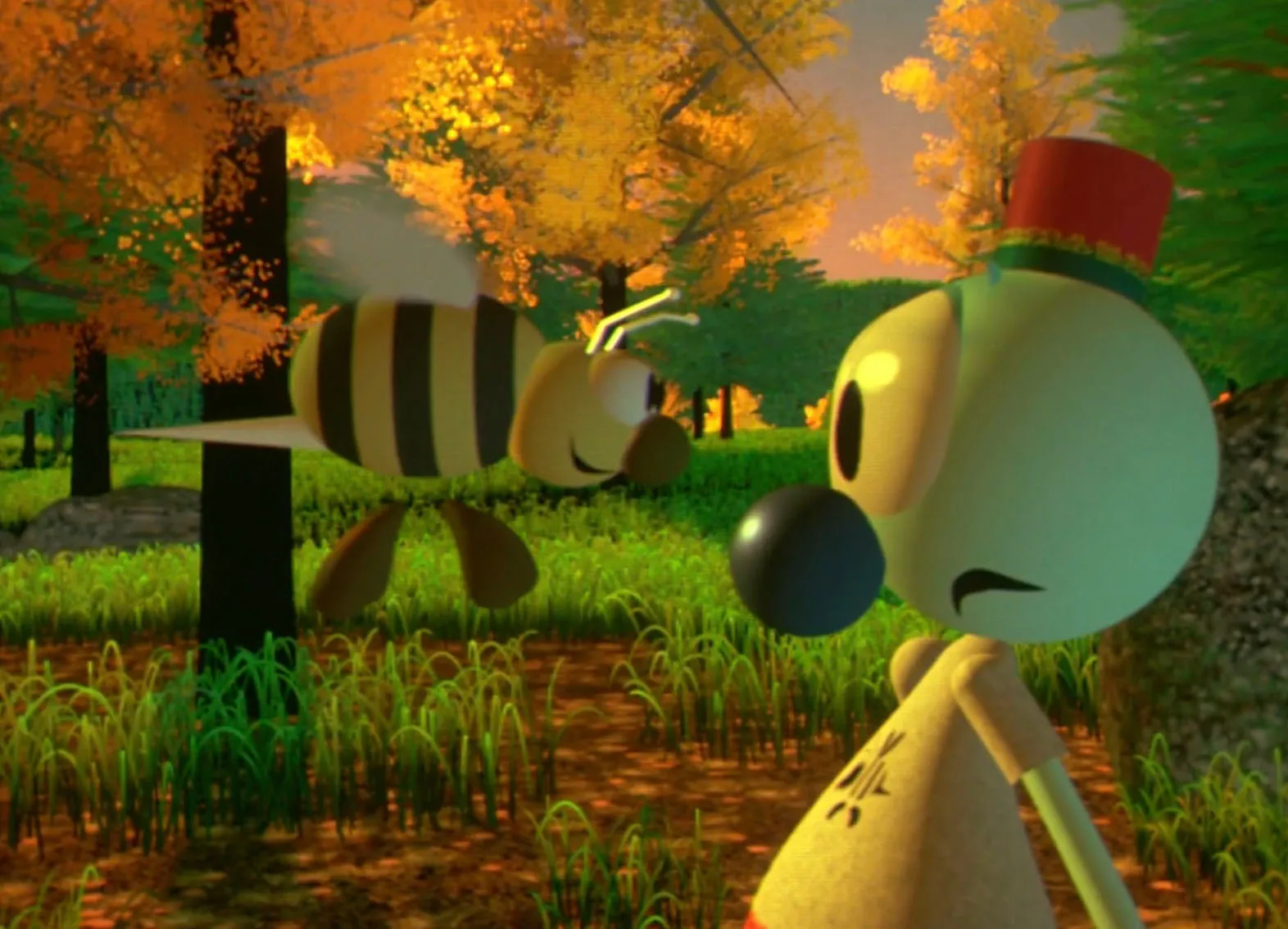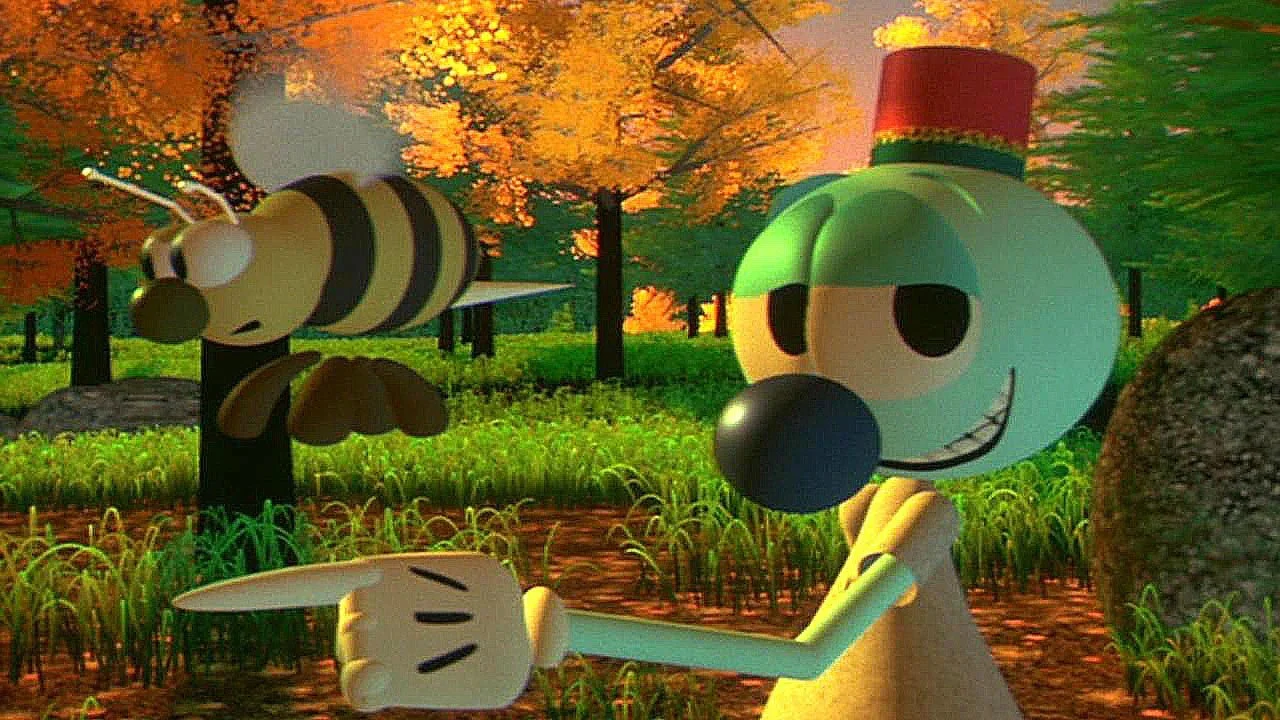
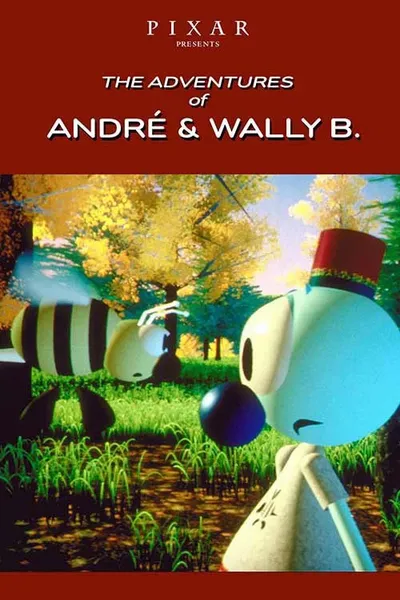
The short film opens with an image of peaceful serenity: the protagonist, André, is immersed in a deep and peaceful sleep in a bright and stylised clearing, under the warm sunlight. This bucolic tranquillity is suddenly interrupted by the arrival of Wally B., a buzzing and lively bee, whose insistent presence is clearly motivated by annoying intentions. Feeling threatened in his rest, André does not hesitate for a moment and desperately tries to escape the bee. This marks the beginning of a frantic and chaotic chase, where the two characters move at breakneck speed, darting relentlessly through the wooded landscape. At the height of the chase, Wally B. almost catches up with André, ready to launch his attack. However, the bee misses its target and crashes comically into the surface of a tree trunk. The impact is so violent that his stinger is visibly bent and twisted. Stunned and disoriented, the bee clumsily flies away. André, seizing the opportunity, decides to end the brief but intense confrontation with a mocking gesture: he takes off his cap and throws it with precision, hitting Wally B. in mid-flight. The bee falls to the ground, momentarily stunned by the double impact. But its spirit is not broken: a moment later, Wally B. gets up and quickly resumes flight. Despite its defeat, the bee flashes a cheeky, cunning smile, silently promising a possible rematch.
To give the short film an unprecedented sense of dynamism and speed, the animation team implemented a revolutionary technique: computer-generated motion blur, used here for the first time in the history of digital animation. Prior to this innovation, fast-moving computer-animated objects tended to appear as a series of rapidly alternating static images, resulting in an unnatural, jerky appearance or a simple rigid “shift”. Motion blur solved this problem in two ways: - Simulation of real photography: the effect faithfully simulates what happens when you record a fast-moving object with a real high-speed camera or with a long exposure time. Fast-moving objects and characters (such as André's frantic run or Wally B.'s flight) are not simply moved from one frame to the next, but are blurred along the direction of their movement. - Increased perception of speed: this blurring tricks the viewer's eye, which automatically interprets the blur as the trail of a very fast movement. The result was an exponential increase in the perception of speed and dynamism on screen, making the chase not only smoother, but also much more engaging and exciting. In summary, the introduction of motion blur was fundamental in giving 3D models a lightness and visual impact typical of traditional animated drawings (where the effect was achieved with hand-drawn lines), establishing a new standard for the representation of movement in computer animation.