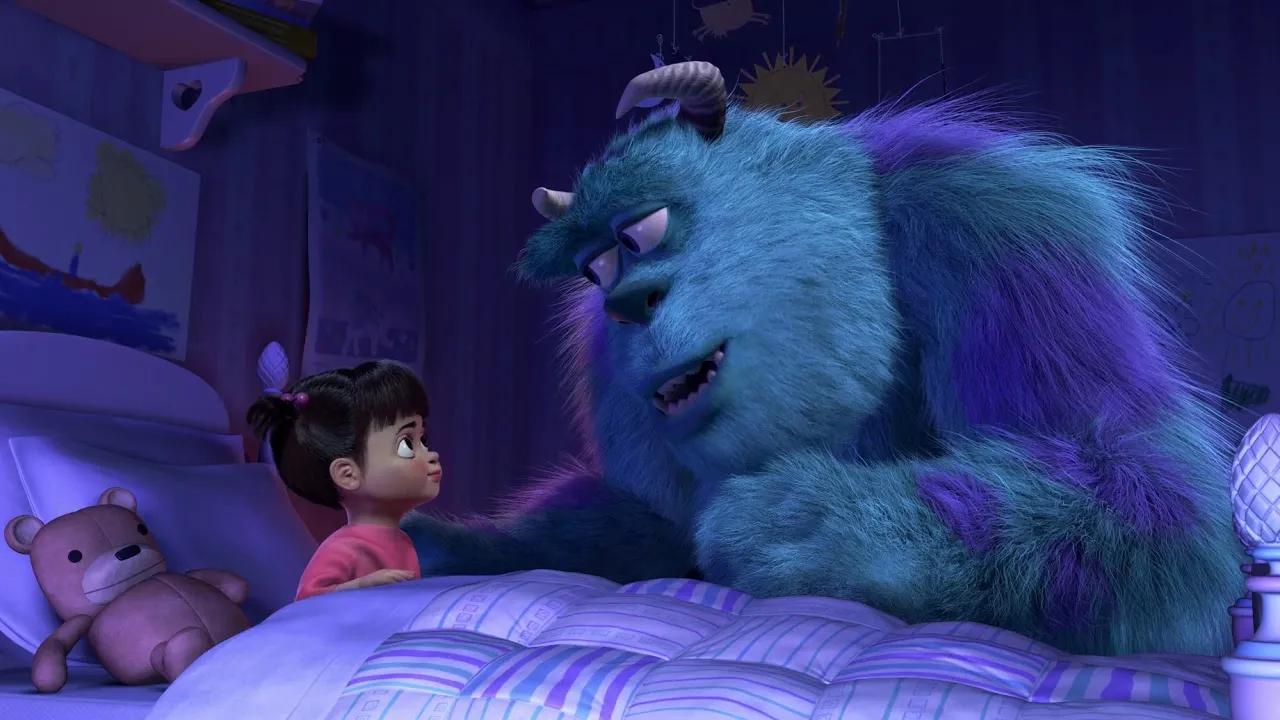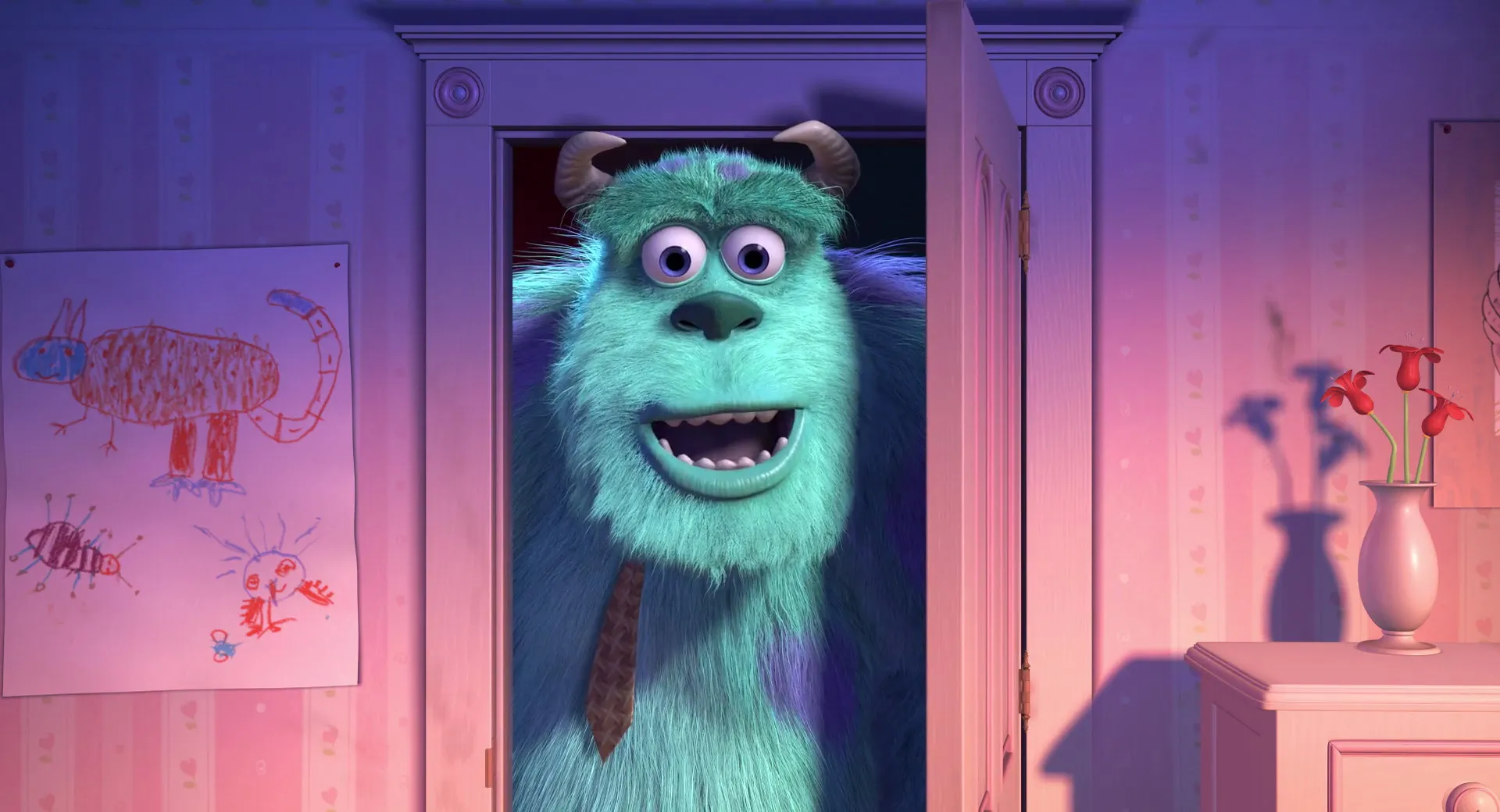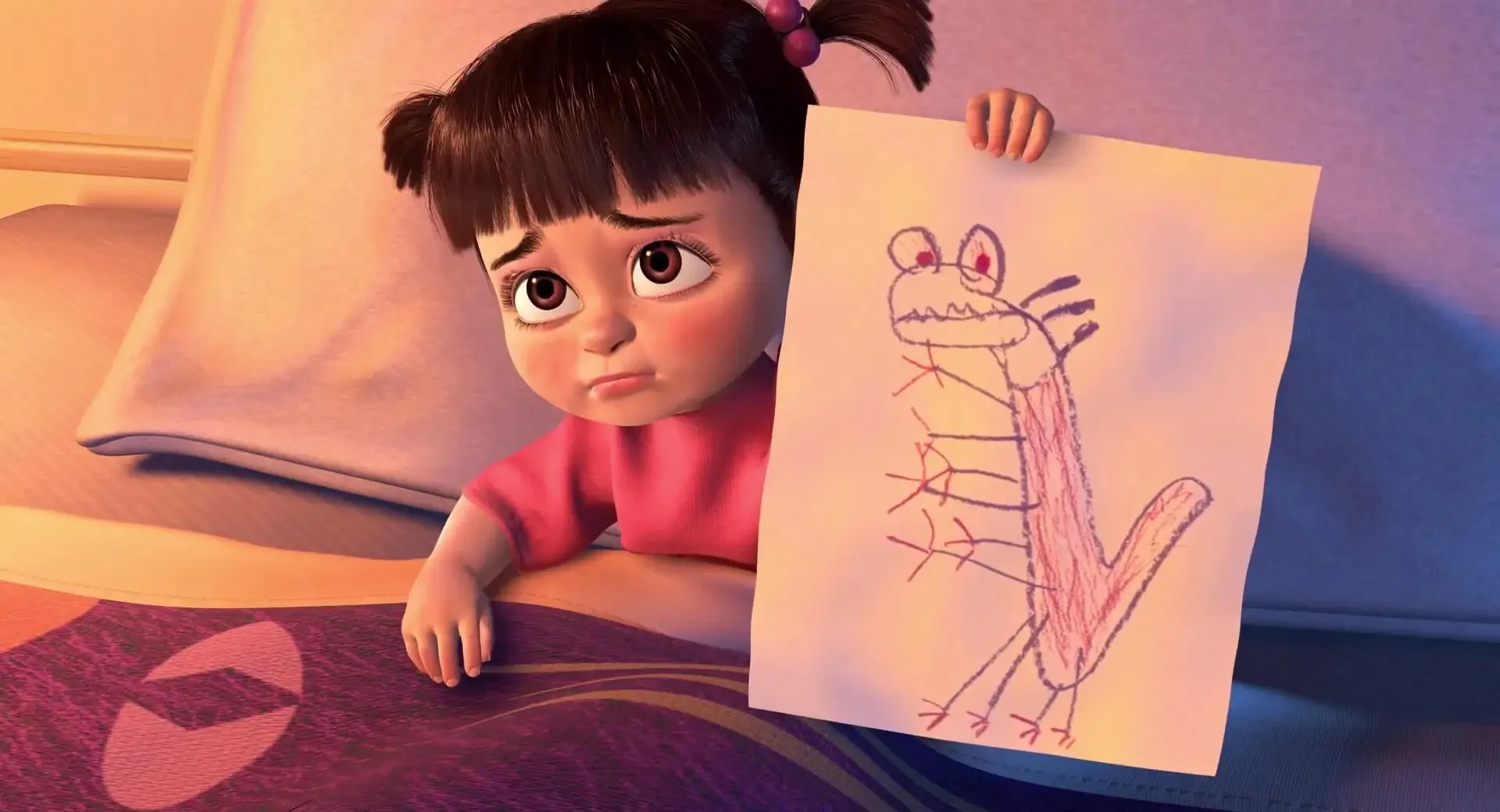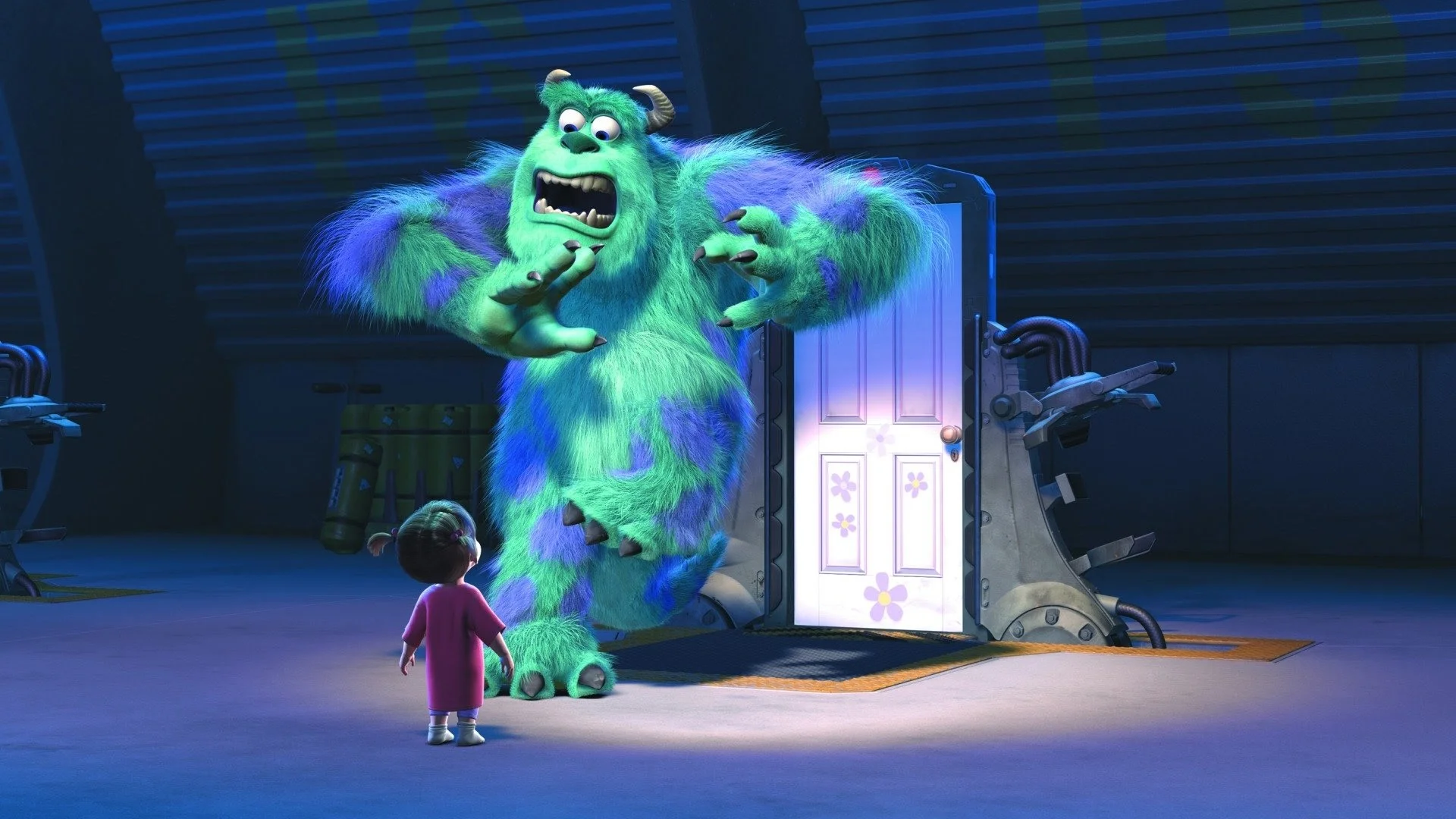
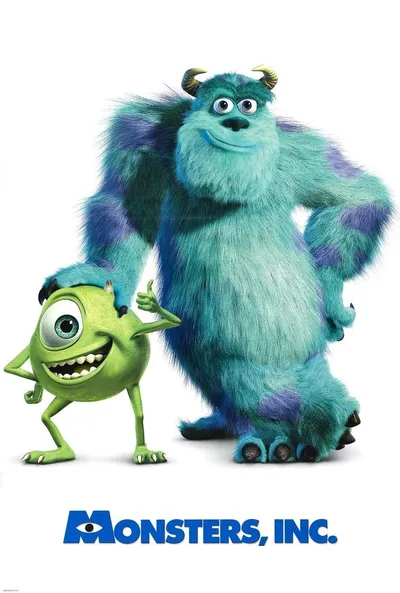
There’s a reason why monsters live in children’s closets: it’s their job. Monsters, Inc. is the most efficient scream-processing factory in the monster world, and there’s no better Scarer than James P. Sullivan. But when “Sulley” accidentally lets a little human girl into Monstropolis, his life—and that of his friend Mike—gets turned upside down.
In Monsters, Inc., Sulley was designed to be a large, quadrupedal character covered with more than 2.3 million individual hairs, each of which needed to behave in a realistic and consistent manner during dynamic movements. Traditional animation techniques could not feasibly handle this level of complexity: manually keyframing individual hairs or clusters would have been prohibitively time-consuming and prone to visual inconsistencies. Moreover, interactions with other characters, collisions with objects in the environment, and the need for believable secondary motion—such as jiggling, bouncing, and stretching of the fur during jumps or impacts—required a physically based approach. To achieve these goals, Pixar developed an advanced fur simulation system that allowed Sulley’s hairs to respond automatically to forces, gravity, inertia, and environmental interactions, ensuring a natural and cohesive appearance while maintaining control over the final artistic look.
Pixar’s fur simulation system is based on hair and fiber dynamics, combining procedural physics with animator controls. Each hair strand is represented as a chain of connected segments, with algorithms calculating forces such as tension, bending, and collisions with other hairs, Sulley’s body, and environmental objects. Gravity, inertia, and external forces are integrated to generate realistic movement in response to the character’s animation. To maintain efficiency, hairs are grouped into clusters for coarse calculations, while finer details are interpolated procedurally, producing millions of interactive strands without excessive computation. Animators can also apply constraints or influence regions, adjusting stiffness, damping, or collision priorities to preserve artistic intent. This system allows Sulley’s fur to deform and flow naturally with body motion and environmental contact, delivering highly detailed and consistent results while eliminating the need to animate each strand manually. The approach represented a major technical leap in feature animation, combining physically plausible simulation with artistic flexibility.
Fizt operates as a physically based cloth simulator, where each garment or element is modeled as a mesh with assigned properties such as mass, friction, and elasticity. The system calculates how the cloth responds to the character’s movements, gravity, collisions with other objects, and self-collisions within the garment. Animators can define constraints, control specific regions, or apply custom stiffness and damping parameters to achieve the desired artistic effect. During simulation, the clothing mesh deforms independently of the underlying body, generating natural folds, swings, and interactions automatically. This approach not only created more believable clothing behavior for Boo but also streamlined the animation workflow, eliminating the need for animators to manually keyframe subtle cloth movements while still allowing precise adjustments where artistic intent demanded it.