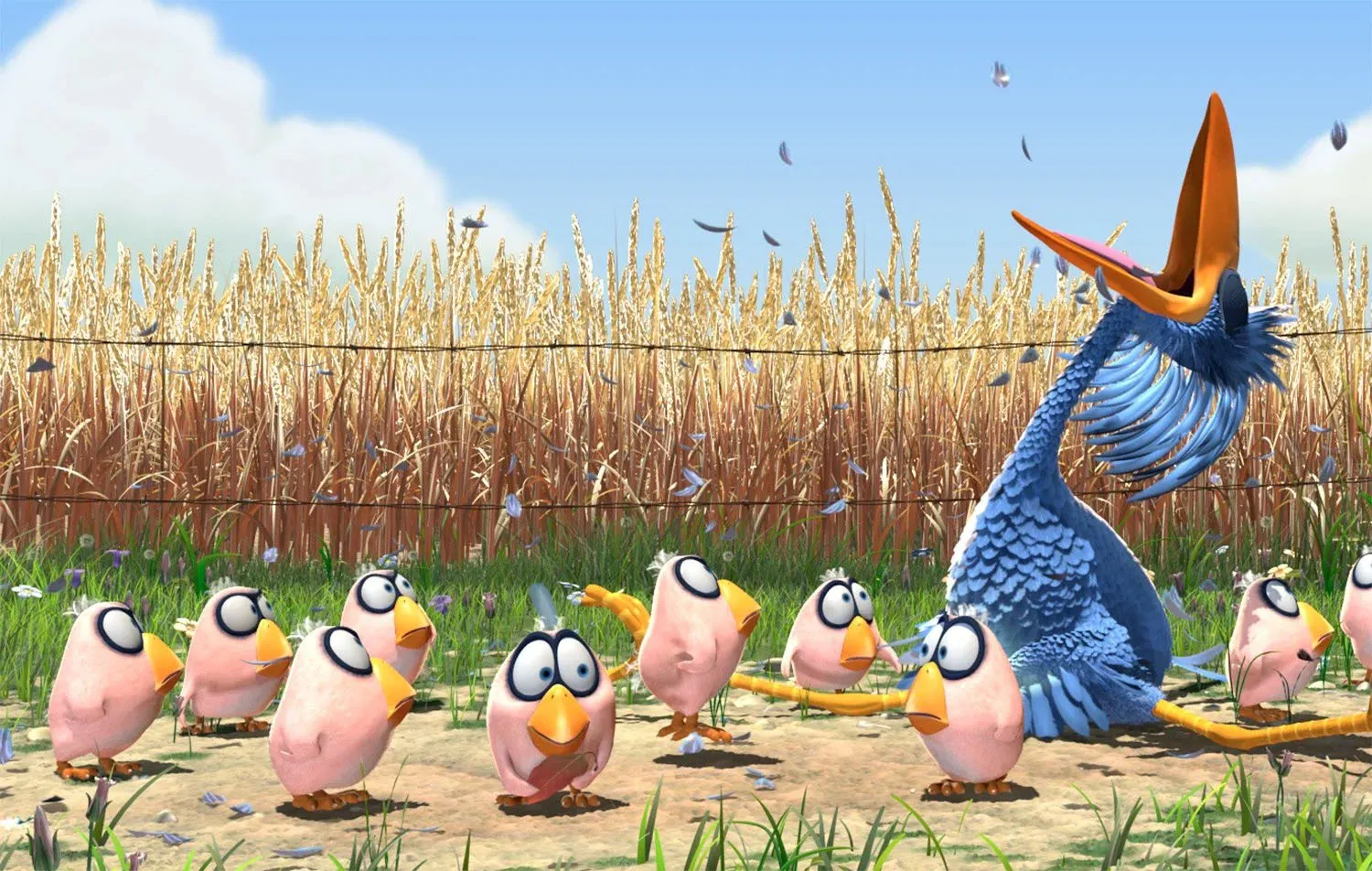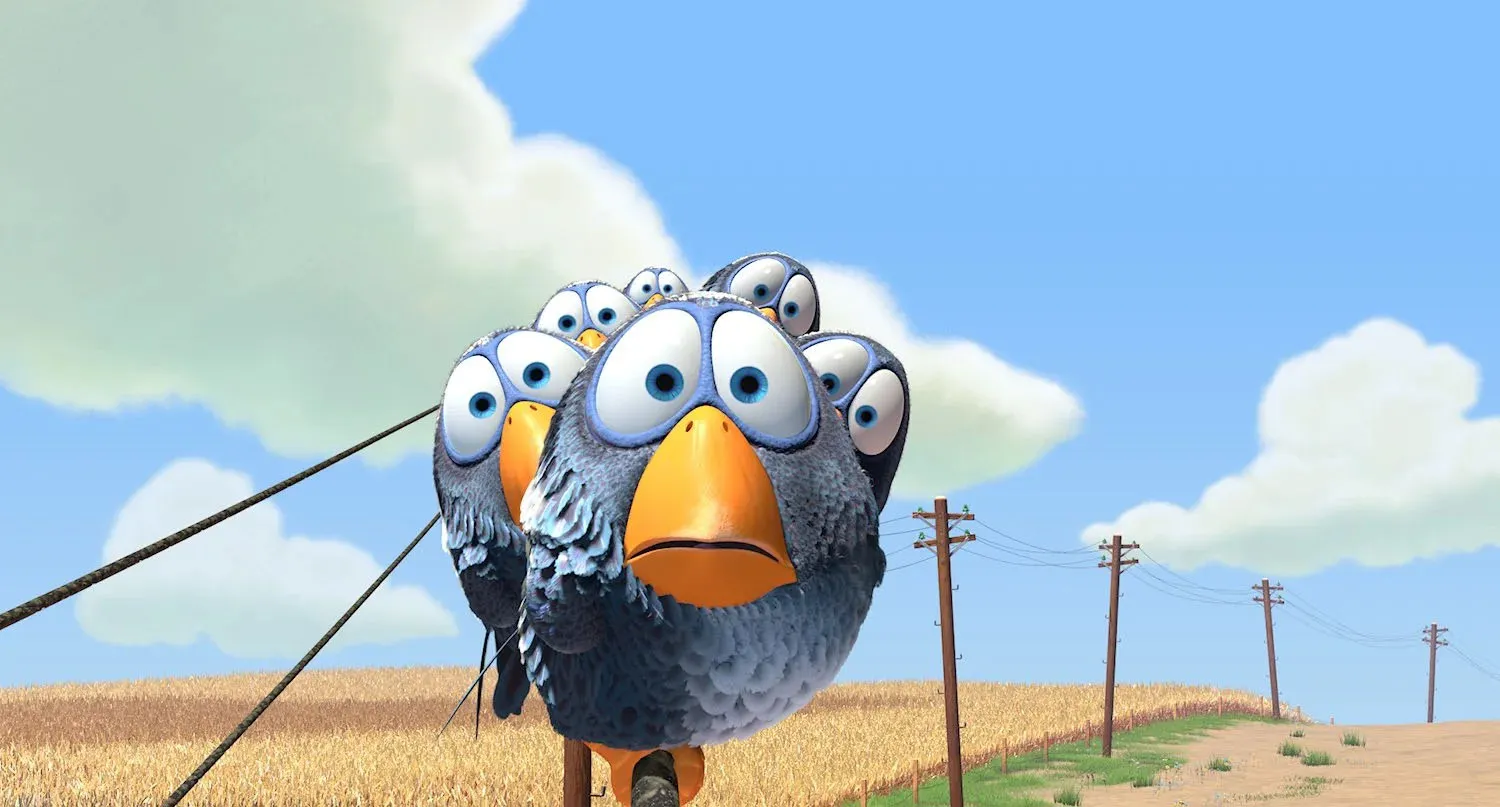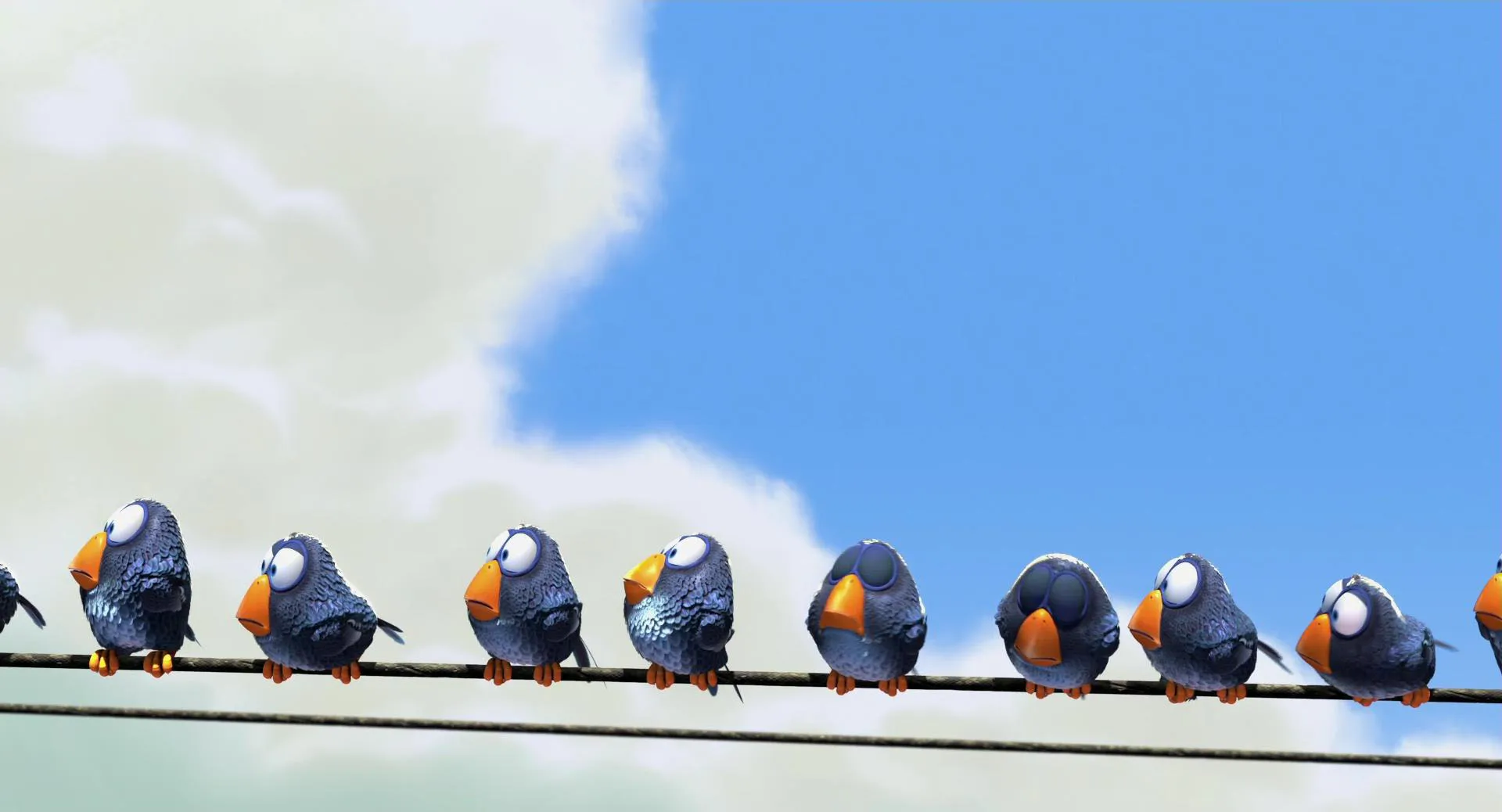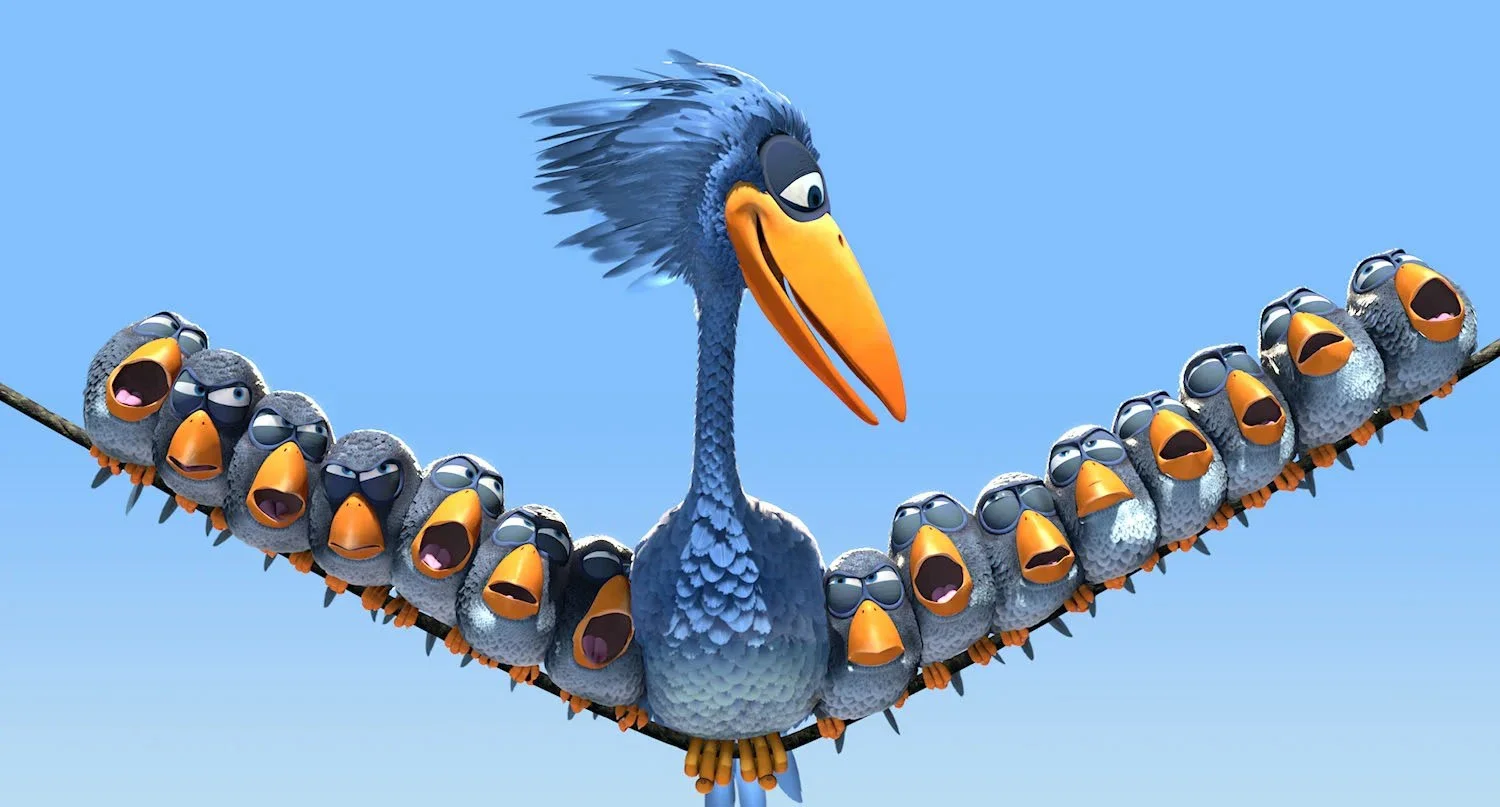
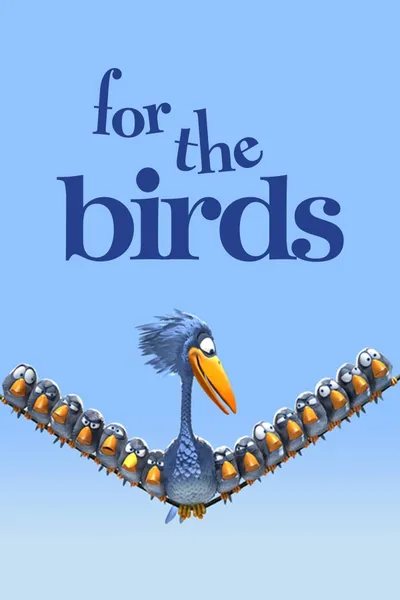
One by one, a flock of small birds lands on a telephone wire. Being so close together already causes some problems, but then a large, clumsy bird tries to join them. The similar-looking birds can’t help but tease him—and in the end, their flock mentality proves to be embarrassing.
In the short-film For the Birds, Pixar needed to animate a group of small characters interacting in extremely close proximity, often occupying the same limited space on a telephone wire. The birds were meant to visibly press, squash, and crowd against one another, exaggerating physical contact for comedic effect while still preserving a believable sense of volume and material resistance. Traditional collision systems were insufficient for this task, as they either allowed unnatural mesh interpenetration or produced rigid, mechanical separations between characters. To solve this problem, Pixar developed a technique known as contact pads, specifically designed to simulate soft physical contact. This approach made it possible to convey the illusion of compression and pressure between the birds, while maintaining precise artistic control over deformations and avoiding visually implausible intersections.
Bill Wise, the technical supervisor, created “widgets” in the form of flexible disks—known as contact pads—that were placed between the birds to manage close physical interactions. These pads were integrated into the character rigs and could be directly shaped, positioned, and animated by animators. During animation, the system evaluated whether specific points on a bird’s mesh entered the pad’s bounding region; when this occurred, those points were procedurally displaced according to the pad’s shape, producing controlled surface deformation instead of mesh interpenetration. Multiple birds could simultaneously press against the same contact pad, allowing their surfaces to compress collectively and respond to shared pressure. This approach enabled localized, artist-driven deformations that convincingly simulated soft contact and volume preservation, while remaining predictable and controllable within the animation setup.