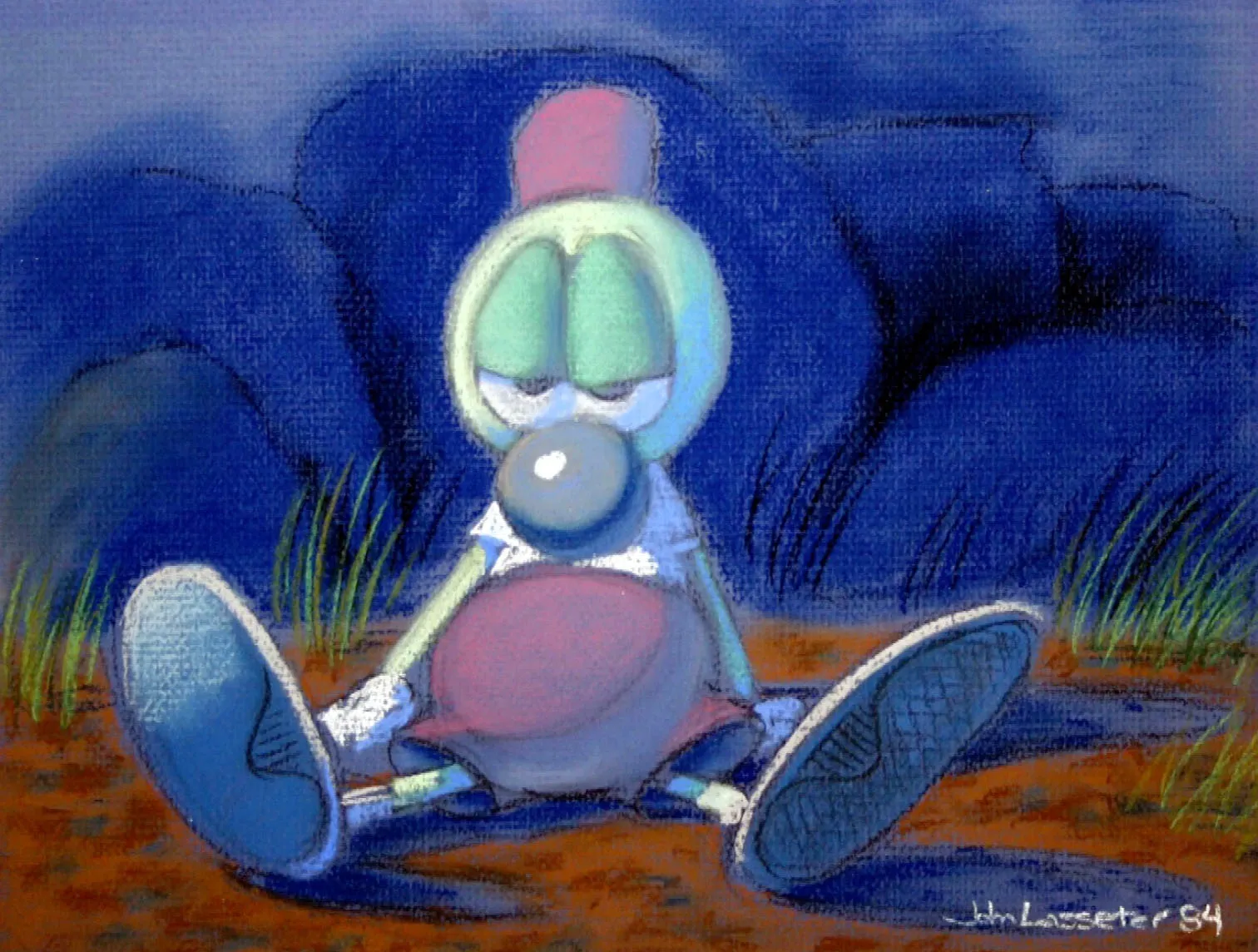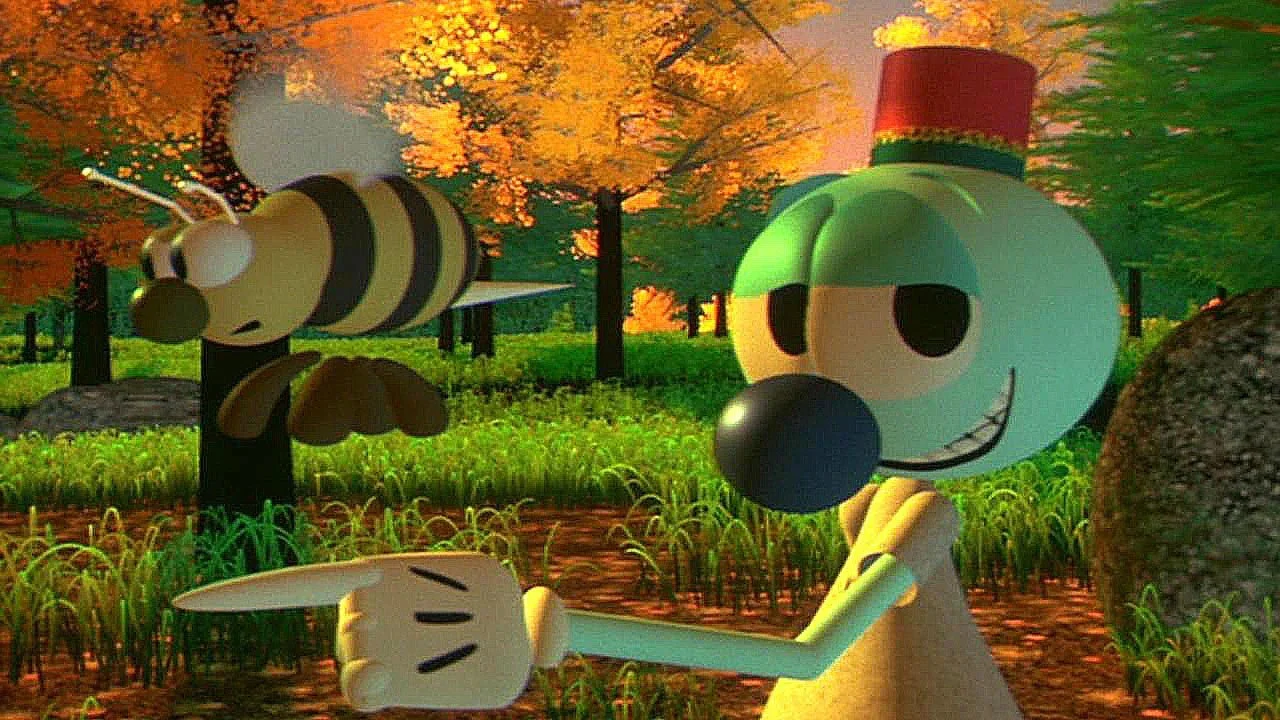
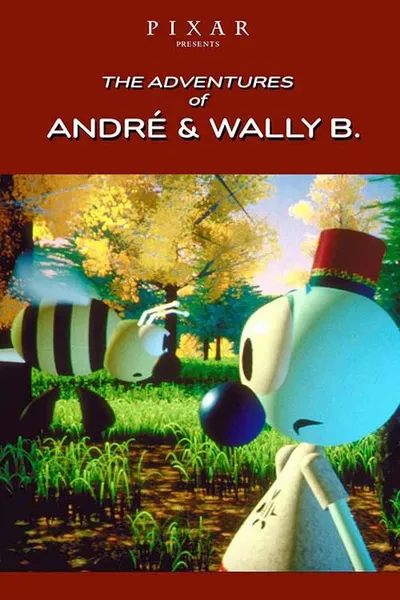
The short film opens with an image of peaceful serenity: the protagonist, André, is immersed in a deep and peaceful sleep in a bright and stylised clearing, under the warm sunlight. This bucolic tranquillity is suddenly interrupted by the arrival of Wally B., a buzzing and lively bee, whose insistent presence is clearly motivated by annoying intentions. Feeling threatened in his rest, André does not hesitate for a moment and desperately tries to escape the bee. This marks the beginning of a frantic and chaotic chase, where the two characters move at breakneck speed, darting relentlessly through the wooded landscape. At the height of the chase, Wally B. almost catches up with André, ready to launch his attack. However, the bee misses its target and crashes comically into the surface of a tree trunk. The impact is so violent that his stinger is visibly bent and twisted. Stunned and disoriented, the bee clumsily flies away. André, seizing the opportunity, decides to end the brief but intense confrontation with a mocking gesture: he takes off his cap and throws it with precision, hitting Wally B. in mid-flight. The bee falls to the ground, momentarily stunned by the double impact. But its spirit is not broken: a moment later, Wally B. gets up and quickly resumes flight. Despite its defeat, the bee flashes a cheeky, cunning smile, silently promising a possible rematch.
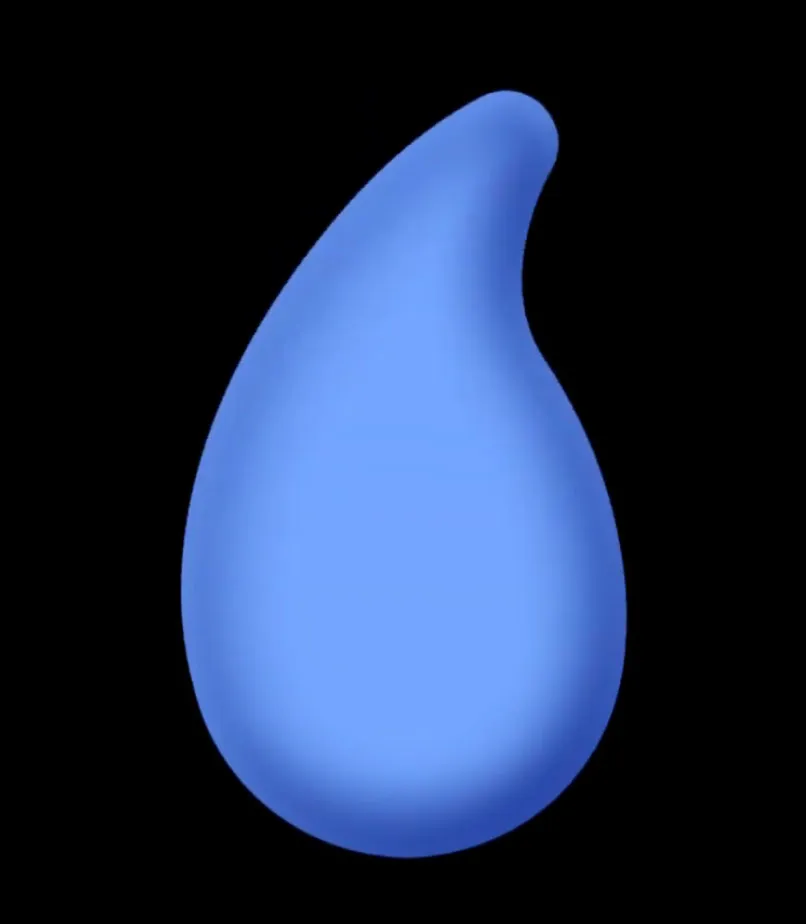
At the time of the production of The Adventures of André and Wally B., the graphic modelling software available had severe limitations. The programme was only capable of generating primitive and simple geometric shapes (such as cones, cubes, spheres, cylinders, patches and lines), making it extremely difficult to create organic and flexible characters. However, director John Lasseter was keen for André's body and Wally B.'s feet to have a pear or teardrop shape, a fundamental curved and flexible silhouette that characterises most traditional animated characters (known as squash and stretch). To overcome this restriction, computer graphics pioneer Ed Catmull came up with an extremely ingenious solution. Catmull managed to create the desired teardrop shape by assembling two spheres of different sizes, both cut in half. - Hybrid assembly: he used the two hemispheres of different diameters. - Automatic joining: the computer was then tasked with filling and smoothly joining the central section between the edges of the two hemispheres. This process created the illusory organic pear shape that primitive modelling could not generate directly. - Control and flexibility: not content with just the static shape, Catmull also implemented specific controls that allowed the composite model to be distorted and bent in various ways. This technique not only solved the problem of basic shapes, but also introduced a previously unseen capacity for deformation, taking computer animation one step closer to the flexibility and expressiveness typical of hand-drawn cartoons.
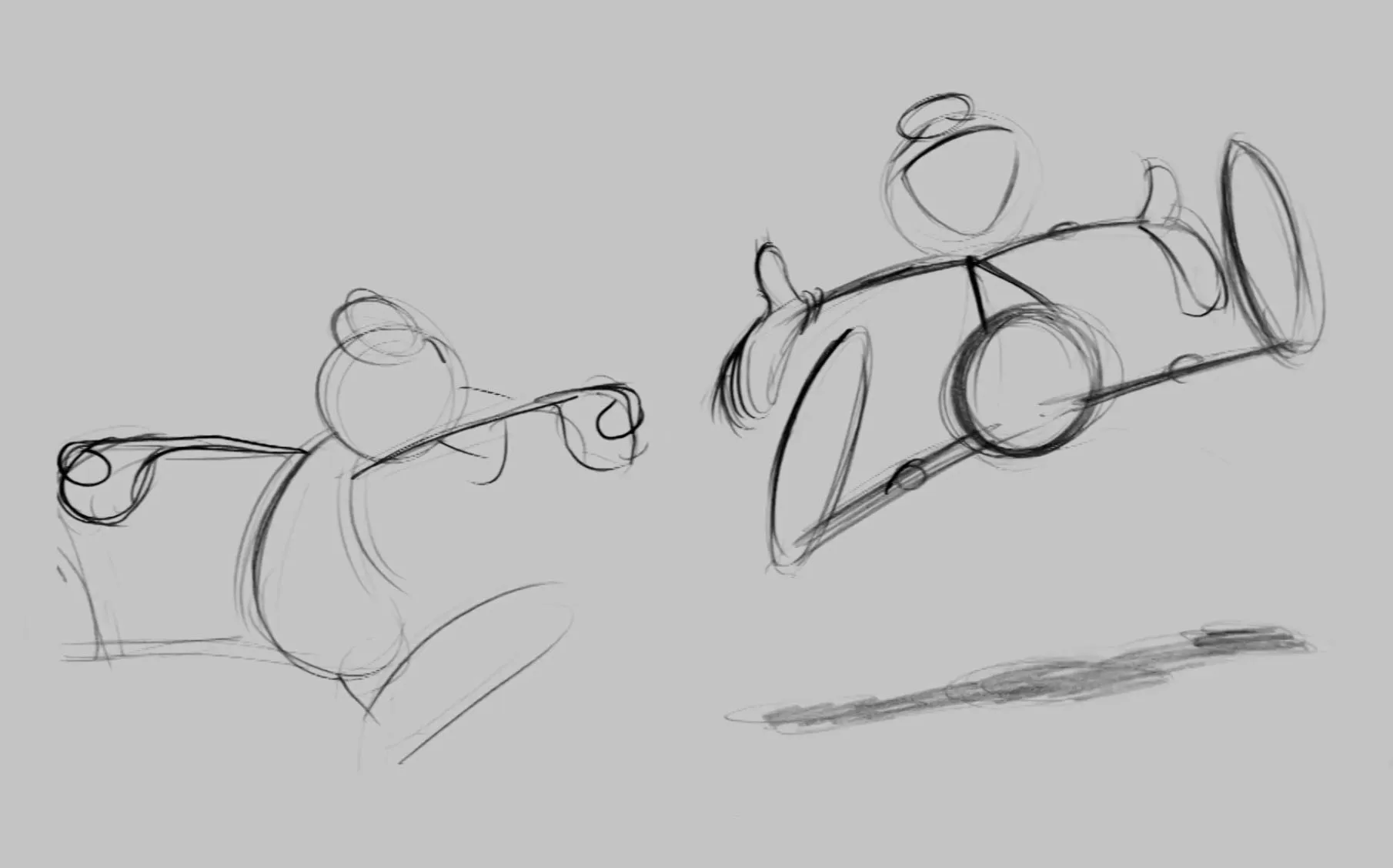
The characters, especially André, were distorted and exaggerated to express movement and emotion, just like in the fundamental principles of traditional Disney animation. This gave the 3D models a flexibility and vitality never seen before. For the first time, a polygonal model (André) could be animated through a digital “skeleton” or “virtual joint” system, enabling more natural and complex movements (such as running and bending).